

Desi Seeds at Risk? Protests Mount Against Proposed Seed Regulation Overhaul
Farmers Warn Seeds Bill 2025 Could Threaten Indigenous Varieties and Empower Multinational Corporations

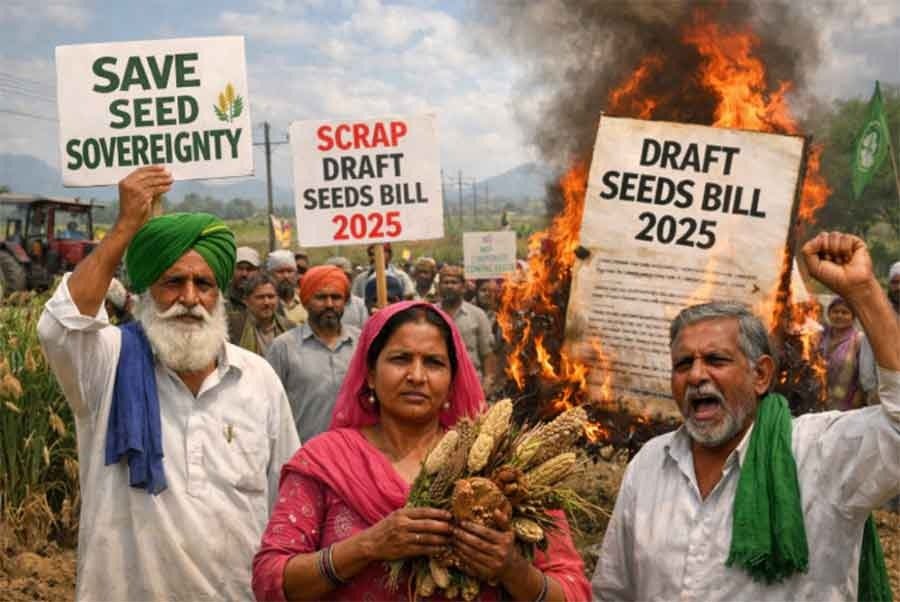
Farmers across India are staging protests against the proposed Seeds Bill 2025, claiming that it disproportionately benefits foreign and multinational seed companies at the expense of local growers and traditional farming practices. The bill is set to be introduced in the next round of the Union Budget session, but concerns have already sparked widespread agitation.
Key Provisions of the Seeds Bill 2025
The proposed legislation aims to update the outdated Seeds Act of 1966, introducing stricter penalties for spurious seeds, digital traceability through QR codes, compulsory registration, and liberalised imports. The government argues that the bill will protect farmers’ rights to save, exchange, and sell farm-collected seeds under the framework of the 2001 Protection of Plant Varieties and Farmers Rights Act.
Public consultation on the bill concluded in December 2025, but critics say farmers’ voices have not been adequately considered.
Concerns Over Foreign Influence and GM Seeds
Farmer unions, including the Samyukta Kisan Morcha (SKM) and All India Kisan Sabha, have expressed concerns that allowing foreign trial data and certification authorities could bypass local quality tests. Opponents warn that multinational companies could flood the market with expensive hybrid and GM seeds, threatening native varieties such as Allahabadi guava and Banarasi langra mango.
Lessons from the Past: Green Revolution and Bt Cotton
Critics point to historical precedents, arguing that high-yield imports during the Green Revolution increased production but also raised input costs, debt, and groundwater depletion. Similarly, Bt cotton initially promised higher yields but led to pest resistance, increased pesticide use, and farmer distress.
There are fears that the new bill may repeat past mistakes, promoting dependency on multinational corporations, endangering biodiversity, and jeopardising India’s food security.
Debate: Innovation or Corporatisation?
As protests intensify, activists argue for protecting indigenous seeds and independent agriculture. The debate centers on whether the bill represents genuine quality improvement and innovation, or a step toward corporatisation of Indian agriculture, threatening seed sovereignty and traditional farming livelihoods.
Comments are closed.