

Stars Align Against Celebrations: All About Kharmas and March Marriage Windows
Month-long inauspicious period from March 15 to April 14 will halt weddings and major Hindu rituals across India.

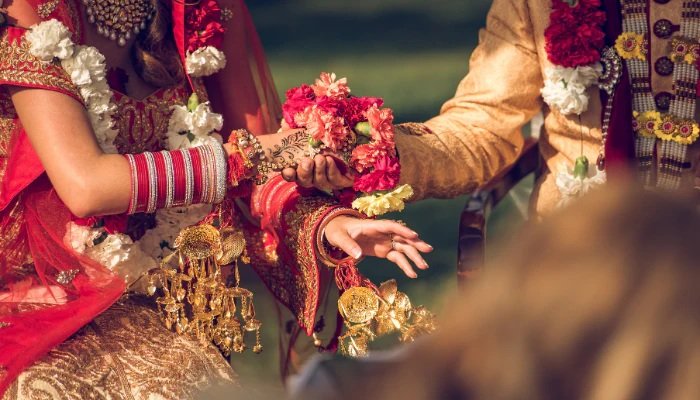
As spring approaches, Hindu devotees across India are preparing for the onset of Kharmas, a month-long period considered inauspicious for major celebrations such as weddings, housewarming ceremonies, and other शुभ कार्य (auspicious rituals).
Rooted in Sanatan Dharma and ancient astrological traditions, Kharmas marks a phase when planetary alignments are believed to discourage significant life events.
What Is Kharmas and Why Is It Observed?
In Hindu astrology, Kharmas occurs when the Sun transits into Sagittarius (Dhanu) or Pisces (Meen). During this transition, it is believed that the Sun’s radiance weakens under Jupiter’s influence, making the period unsuitable for initiating important ceremonies.
In 2026, Kharmas will begin on March 15 at 1:08 PM, coinciding with Meen Sankranti, and will conclude on April 14 at 9:38 AM, when the Sun enters Aries (Mesh Sankranti).
During this time, families traditionally avoid:
-
Weddings (Vivah Sanskar)
-
Griha Pravesh (housewarming ceremonies)
-
Mundan (first hair-cutting ceremony)
-
Other major शुभ मुहूर्त rituals
Religious observances and spiritual practices, however, continue as usual.
Limited Wedding Dates Before Kharmas
With the inauspicious period approaching, couples planning March weddings are advised to finalise dates before March 15.
According to the Hindu Panchang, the auspicious dates available before Kharmas in March 2026 are:
-
March 2 (Monday)
-
March 3 (Tuesday)
-
March 4 (Wednesday)
-
March 7 (Saturday)
-
March 8 (Sunday)
-
March 9 (Monday)
-
March 11 (Wednesday)
-
March 12 (Thursday)
Astrologers recommend conducting weddings on favourable weekdays such as Monday, Wednesday, Thursday, or Friday. Preferred muhurats include Abhijeet Muhurat and Godhuli Bela, while pure lunar days like Dvitiya and Tritiya are considered ideal.
The early morning Brahma Muhurat at dawn or sacred sunset hours are traditionally regarded as spiritually powerful time windows.
A Period of Reflection, Not Celebration
While Kharmas restricts celebratory events, it is viewed by many devotees as a spiritually significant time meant for introspection, prayer, charity, and religious observances.
The observance highlights Hinduism’s deep connection with cosmic cycles and planetary transitions. Rather than a time of fear, Kharmas is often interpreted as a reminder to align human actions with celestial rhythms.
As the Sun transitions once again in mid-April, celebrations will resume — but until then, faith and patience guide devotees through this astrological pause.
Comments are closed.