
Three for BJP? Odisha’s Rajya Sabha Elections Spark Alliance Buzz and Bold Claims
BJP eyes three seats as BJD fights to retain ground ahead of March 16 Rajya Sabha polls in Odisha

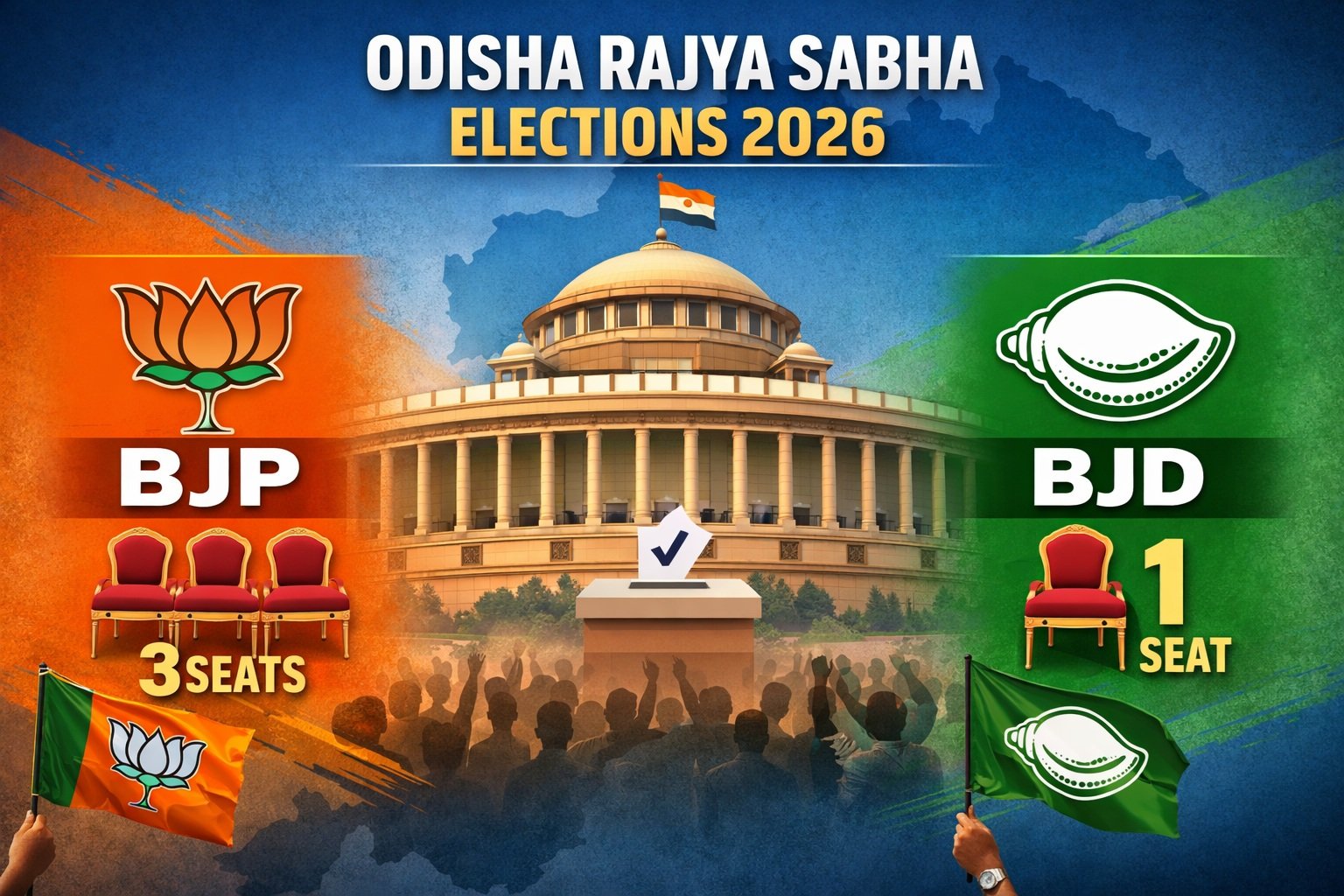
With the Rajya Sabha elections scheduled for March 16, Odisha’s political landscape is witnessing intense speculation and strategic maneuvering, particularly within the ruling Bharatiya Janata Party (BJP). Four seats from the state will fall vacant on April 2, setting the stage for a high-stakes contest.
Four Rajya Sabha Seats Up for Grabs
The Election Commission of India has announced elections for 37 Rajya Sabha seats across 10 states, including four from Odisha.
The seats becoming vacant are currently held by Mamata Mohanta, Sujit Kumar, Mujibulla Khan, and Niranjan Bishi. With the BJP holding a majority in the 147-member Odisha Assembly, political observers believe the party is well positioned to secure at least two seats comfortably — and possibly three.
Assembly Arithmetic Favors BJP
The Bharatiya Janata Party has 79 MLAs in the Assembly, along with the support of three independents, taking its effective strength to 82. The Biju Janata Dal (BJD) holds 48 seats, Congress has 14, CPI(M) has one, and two independents remain.
With around 30 votes required to win a single Rajya Sabha seat, the numbers clearly tilt in the BJP’s favor. Senior BJP leaders, including state minister Prithviraj Harichandan and Odisha in-charge Vijay Pal Singh Tomar, have publicly expressed confidence that the party will win three seats.
Manmohan Samal Emerges as Strong Contender
State BJP president Manmohan Samal is being widely discussed as a likely nominee. Samal is credited with steering the party to its historic victory in the 2024 Assembly elections, forming Odisha’s first standalone BJP government.
Having lost his Chandbali seat in 2024, Samal is not currently part of the government, making a Rajya Sabha berth a potential reward for his leadership and loyalty. Analysts suggest his nomination would recognize his role in expanding the party’s footprint in the state.
Internal Promises and Regional Balancing
Another name generating buzz is Abhinandan Panda, son of veteran BJP leader Basant Panda. Party insiders claim he was assured a Rajya Sabha opportunity after stepping aside during the 2024 Assembly elections and contributing significantly to the party’s campaign efforts.
Other grassroots leaders such as Samir Mohanty, Golak Mahapatra, Jatin Mohanty, and Sarada Shatapathy are also reportedly in consideration.
Additionally, former BJD leaders Mamata Mohanta and Sujit Kumar — who switched to the BJP and successfully contested by-elections — are seen as valuable assets. Former Rajya Sabha MP Amar Patnaik, who also moved from the BJD to the BJP, has further strengthened the ruling party’s ranks.
Possibility of Central Leadership Picks
Beyond state leaders, speculation is also rife about potential nominees from the BJP’s central leadership. Names such as Sunil Bansal, credited with strengthening the party’s organization in Odisha, and Vijay Pal Singh Tomar have surfaced.
The party has previously opted for technocratic and strategic choices, such as nominating Ashwini Vaishnaw to the Rajya Sabha in 2019, who now handles key Union portfolios.
BJD Pushes Back
The BJD has signaled it will not concede ground easily. Senior leader Arun Kumar Sahu has publicly questioned the BJP’s claim of winning three seats, arguing that the numbers may not fully support such confidence.
However, with the BJP’s numerical advantage in the Assembly, the opposition faces an uphill task in retaining influence.
High Stakes Ahead of Nomination Deadline
The BJP’s core committee, led by Manmohan Samal and attended by Chief Minister Mohan Charan Majhi, recently met to deliberate on candidates. No official announcement has yet been made, keeping political circles on edge.
As the nomination deadline approaches, the Rajya Sabha elections could significantly reshape Odisha’s political equations, testing party loyalties and leadership strategies. Whether the BJP rewards grassroots workers or opts for strategic national figures remains to be seen — but the battle lines are clearly drawn.
Comments are closed.