

Sand Removal from Konark Sun Temple Jagamohan to Begin After 123 Years
ASI to begin sand removal from Konark Sun Temple’s Jagamohan using robotic technology after over a century, following safety clearance from IIT Madras

ASI Prepares for Major Conservation Work
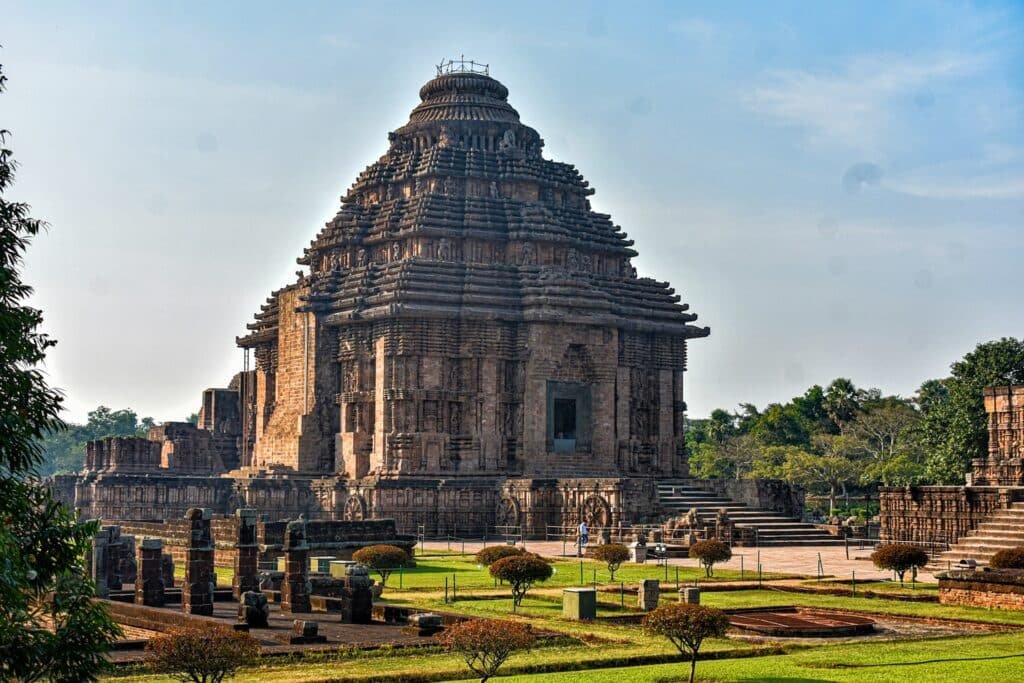
In a significant step towards the conservation of the historic Konark Sun Temple, preparations have been completed to remove sand from the temple’s Jagamohan (assembly hall). The work is expected to begin soon following technical clearance.
Green Signal After Scientific Assessment
The decision to remove the sand comes after a detailed laboratory analysis confirmed that the process would not cause any structural damage to the temple. Sand samples collected earlier were sent to IIT Madras for testing. The report stated that the sand remains stable and its removal would be safe.
Use of Advanced Robotic Technology
The Archaeological Survey of India (ASI) will deploy automatic robotic trolleys to carry out the sand removal process. All mechanical preparations for this advanced operation have already been completed.
Pilot Study and Structural Examination
Earlier, a pilot drilling exercise was conducted on the 80-foot-high western wall of the Jagamohan. A 16-centimetre hole was created to study the internal condition and position of the sand. This assessment played a crucial role in planning the next phase of work.
Work to Begin on Akshaya Tritiya
The initial phase of sand removal is set to commence on the occasion of Akshaya Tritiya. Final design drawings and sectional maps are being prepared by ASI for smooth execution of the project.
Tunnel Construction Planned for Access
As part of the operation, a 9-foot-wide opening will be created in the western wall at a height of 80 feet. A tunnel will then be constructed to facilitate access to the inner portion of the Jagamohan for systematic sand removal.
Historical Background of Sand Filling
The sand inside the Jagamohan was filled over 123 years ago as a protective measure. In 1903, under British rule, the chamber was packed with sand to stabilize the structure of the 13th-century temple.
Earlier, in 1837, Scottish historian James Fergusson had raised concerns about the temple’s condition. Acting on expert advice, the British administration later decided to fill the structure with sand to prevent collapse.
A Landmark Moment in Preservation Efforts
The sand filling process had taken nearly three years to complete at the time. Now, after more than a century, the removal marks a crucial phase in the preservation and restoration of one of India’s most iconic heritage monuments.
Comments are closed.