Bombay High Court Blames Citizens for Mumbai’s Recurring Monsoon Waterlogging
The Bombay High Court said illegal encroachments, clogged drains and misuse of public infrastructure by citizens have made monsoon flooding a recurring problem in Mumbai.


Trending

The Bombay High Court has made strong observations on Mumbai’s recurring waterlogging during the monsoon, saying that the problem is largely man-made and that citizens must also take responsibility for the city’s flooding.
Hearing a matter related to urban infrastructure, a division bench comprising Acting Chief Justice Ravindra V. Ghuge and Justice Gautam Ankhad said that illegal encroachments, blocked drainage systems and misuse of public infrastructure have significantly worsened waterlogging across Mumbai during the rainy season.
The bench observed that water accumulation on city roads during heavy rainfall has become inevitable because drains are frequently clogged with garbage. It also noted that public spaces are often misused through illegal parking, unauthorised constructions and food stalls occupying footpaths, all of which obstruct proper drainage and pedestrian movement.
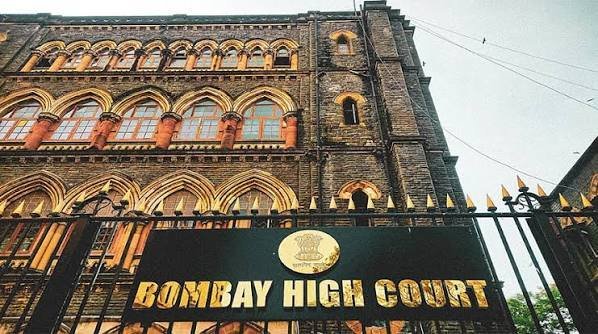
Expressing concern, Justice Ghuge remarked that even the footpaths outside the High Court are occupied by illegal vendors. He said people often encroach on public land for personal benefit and later seek legal protection when authorities initiate eviction proceedings.
In a related civil matter concerning the widening of a road at Mandala village on the Sion-Trombay stretch, the High Court issued a formal notice to the Department of Atomic Energy (DAE).
Representing the Brihanmumbai Municipal Corporation (BMC), senior advocate Milind Sathe informed the court that the civic body has already removed encroachments and cut around 192 trees to maintain the existing 30-foot-wide road.
The BMC told the court that if the DAE hands over the remaining 20 feet of encroachment-free land, the road can be widened to 50 feet, significantly improving traffic flow and infrastructure in the area.
The High Court directed the DAE to take a decision regarding the transfer of land and scheduled the next hearing in the matter for later this month. The case highlights the broader challenge of balancing urban development, environmental concerns and public infrastructure in one of India’s most densely populated cities.
Recover your password.
A password will be e-mailed to you.
Comments are closed.