

MoU Signed Between OPTCL & NABARD for Strategic Financial Partnership
First-ever NABARD project financing for an Odisha state PSU to strengthen power infrastructure and support industrial growth

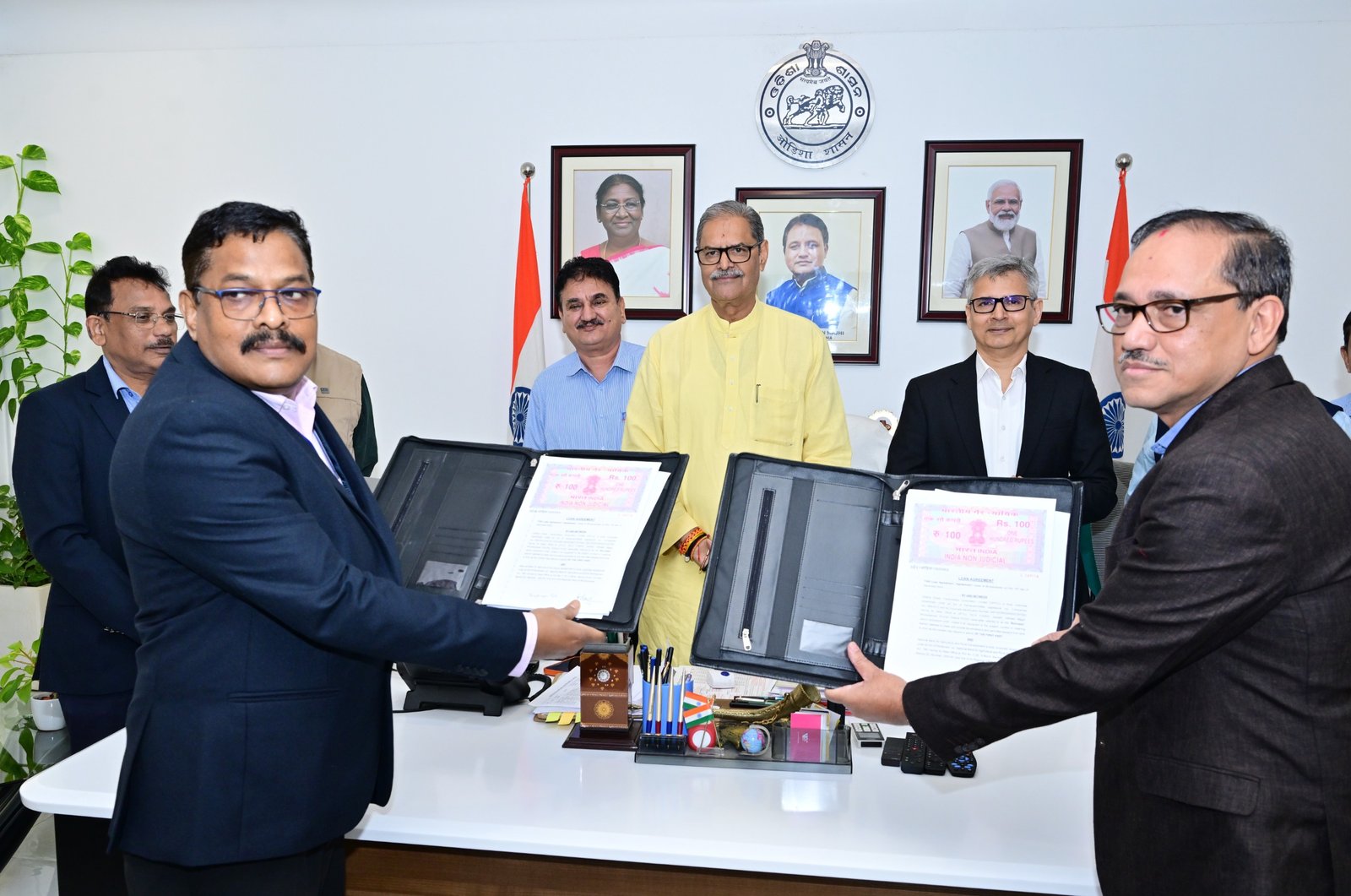
Odisha Power Transmission Corporation Limited (OPTCL) has entered into a landmark financial partnership with the National Bank for Agriculture and Rural Development (NABARD) to strengthen the state’s power infrastructure. This marks the first-ever project financing by NABARD to any state PSU in Odisha.
₹1,685 Crore Loan for Power Infrastructure
Under the Long-Term Loan Agreement, NABARD has sanctioned a loan of ₹1,685.27 crore to OPTCL at a competitive interest rate of 7.75% per annum. Of this, ₹900 crore will fund new transmission projects, while the remaining funds will be used to swap existing high-cost loans, enhancing the financial efficiency of the PSU.
Landmark Step for Odisha’s Power Sector
This strategic initiative is expected to ensure a reliable and quality power supply for both upcoming industries and consumers across the state. With this financing, OPTCL aims to accelerate the development of critical transmission infrastructure, supporting Odisha’s growing industrial and economic landscape.
Key Officials at the Signing Ceremony
The MoU signing was graced by Hon’ble Deputy Chief Minister, Agriculture & Farmers’ Empowerment, Energy Shri Kanak Vardhan Singh Deo, and Shri Bhaskar Jyoti Sarma, CMD, OPTCL, who highlighted the collaborative efforts between the organizations.
The agreement was formally exchanged between Shri S. K. Sahoo, Director (Finance), OPTCL, and Shri V. K. Nag, General Manager, Odisha Regional Office, NABARD. Other functional directors and senior officials of both OPTCL and NABARD were also present.
Boosting Industrial Growth and Power Reliability
This partnership is poised to fast-track critical transmission projects, ensuring uninterrupted power supply to industries and residential consumers alike. Experts believe that this collaboration will significantly contribute to Odisha’s economic growth and industrial development in the coming years.
Comments are closed.