

New Year Ritual: India-Pakistan Swap Nuclear Facilities and Prisoner Lists Amid Tensions
34th consecutive annual exchange under the 1988 agreement reflects limited diplomatic engagement as both nations also share prisoner and fisherman lists

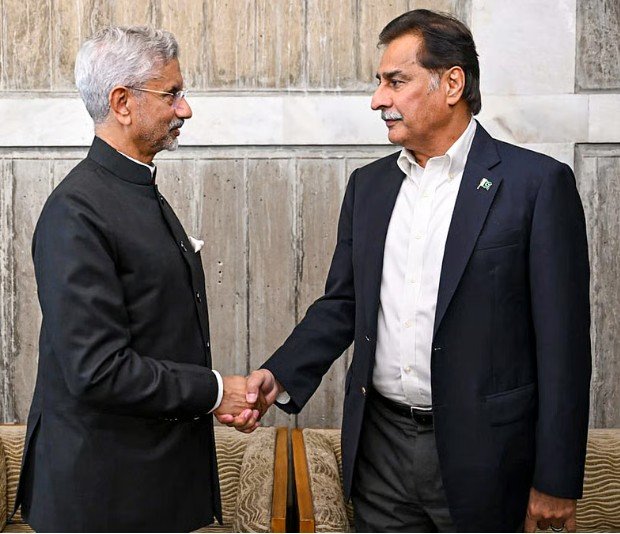
On January 1, 2026, India and Pakistan continued their long-standing practice of exchanging sensitive nuclear facility lists, marking the 34th consecutive year of such measures. The exchange was conducted through the respective embassies, in line with the 1988 Agreement on the Prohibition of Attack, which has been in effect since 1991.
Annual Compliance Under the 1988 Nuclear Agreement
The bilateral agreement requires both nations to share details of their nuclear facilities annually to prevent attacks, reflecting a restrained form of diplomacy despite broader tensions. This yearly exercise underscores the limited but structured engagement between the two countries on critical security issues.
Exchange of Consular Access Agreements
Alongside nuclear facility lists, India and Pakistan exchanged consular access agreements as per their 2008 bilateral framework. India submitted a list of 391 Pakistani national prisoners and 33 Pakistani fishermen, while Pakistan provided a list of 58 Indian civilian prisoners and 199 Indian fishermen.
India Demands Repatriation of Prisoners
The Indian Ministry of External Affairs (MEA) reiterated calls for the repatriation of 167 Indian fishermen and 35 civilian prisoners, citing over-sentencing, and 47 prisoners denied legal counsel. New Delhi also demanded the safe care and protection of the remaining detainees before their return and urged the release of missing Indian defence personnel.
Historical Context of Repatriation Efforts
Since 2014, India has facilitated the return of 2,661 Pakistani fishermen and 71 civilian prisoners, highlighting that exchanges of prisoners remain one of the few consistent channels of cooperation between the two nations. Beyond these annual processes, relations between India and Pakistan remain largely frozen.
Limited Diplomacy Amid Broader Tensions
The nuclear list exchange and consular access updates demonstrate that even amid political and military tensions, structured mechanisms continue to exist to maintain minimum engagement. Experts note that these measures are vital in reducing risks of miscalculations and fostering humanitarian gestures like prisoner repatriation.
Comments are closed.