

Sharanya Ghosh’s Manchapravesh Marks a Promising Odissi Debut
Sharanya Ghosh Shines in Manchapravesh, Celebrating Odissi Tradition and Family Legacy

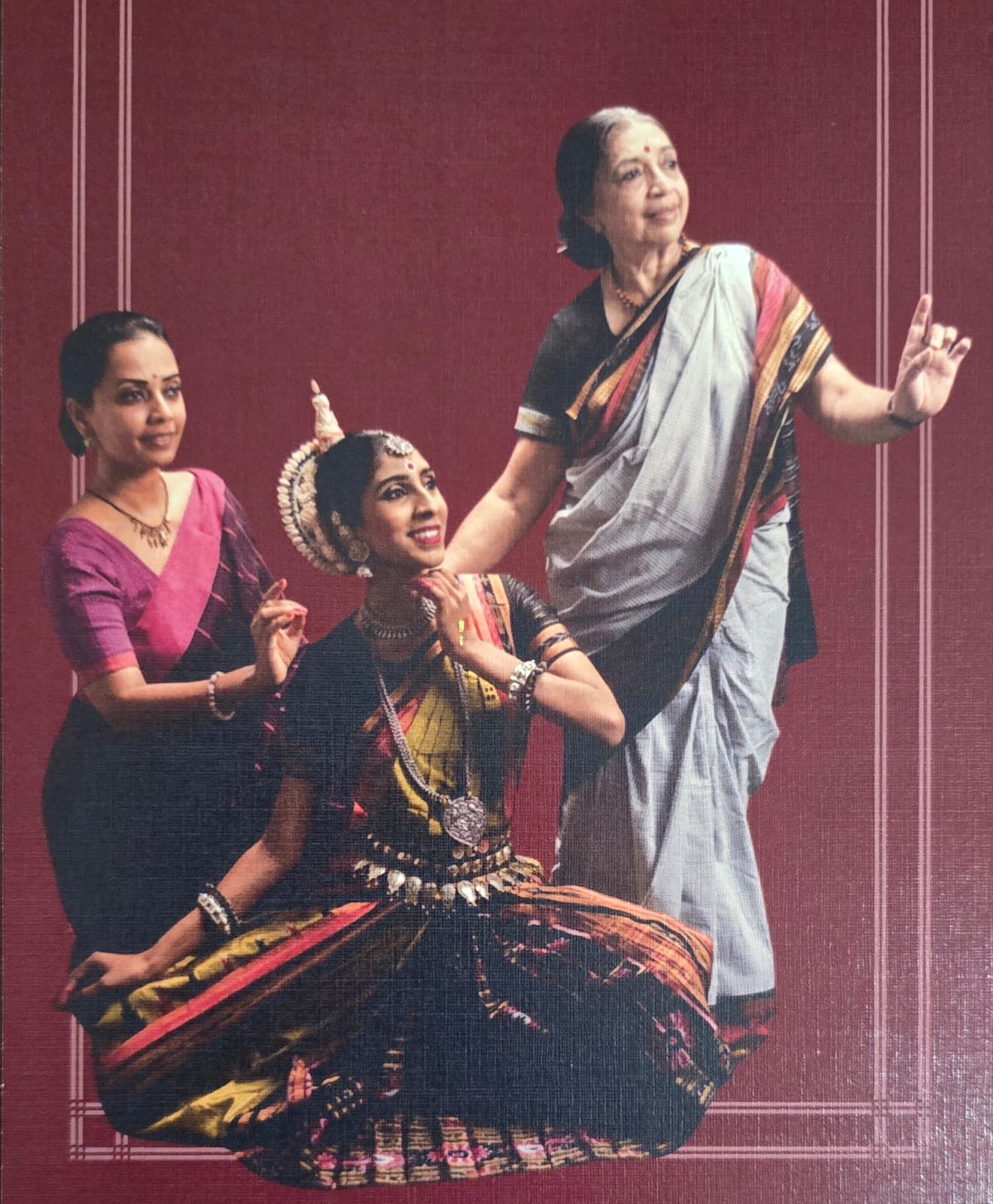
The evening of 4th December 2025 at the Sangeet Mahabharati open-air stage unfolded like a confluence of tradition, devotion, and artistic blossoming, marking the Manchapravesh of Sharanya Ghosh—a gifted young dancer whose journey in Odissi has been deeply shaped by lineage, learning, and lived experience. Witnessing this milestone was profoundly moving, for her transformation from a sincere young student under Guru Smt. Daksha Mashruwala into a poised and confident solo artiste felt both natural and deeply gratifying. Sharanya stands nurtured within an extraordinary musical heritage—the legacy of her grandfather Padma Bhushan Pandit Nikhil Ghosh; her father and guru Pandit Nayan Ghosh; her mother Smt. Jyoti Ghosh; and her brother, the brilliant tabla exponent Ishaan Ghosh. Yet beyond the privilege of legacy, what shone through her performance was her own sincerity, discipline, and passion, which have shaped her into a dancer of individuality and depth. Her art bears the imprint of devotion—towards her Guru, her Parampara, and the sacred values of Indian classical arts.


Sharanya commenced with a reverential offering, beginning with the evocative chant “Nanya Spriha Raghupate…” in honour of her grandfather. This invocation flowed seamlessly into the traditional Mangalacharan, followed by a serene Bhoomi Pranam. Her rendition of Keki Kanthava Neelam—with music by Pandit Raghunath Panigrahi and choreography by Guru Kelucharan Mohapatra—brought alive the splendour of Sri Rama, enriched by Manoj Desai’s vocals and Rohan Dahale’s Mardala. Her torso movements, crisp footwork, and subtle abhinaya reflected a fine assimilation of her Guru’s teachings.

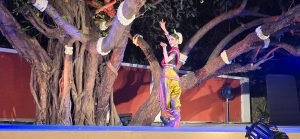
One of the most memorable moments was the newly composed Pallavi in Raga Tilak Kamod—a precious creation by her father and brother, whose melodic and rhythmic framework carried a freshness born of familial affection and artistic understanding. Rohan Dahale’s rhythm inputs enlivened the composition with lilting patterns that allowed Sharanya’s nritta to unfold with buoyancy and elegance. The voices of Manoj Desai and Ankita Joshi added luminosity, complementing the agile and sensitive choreography of Guru Daksha Mashruwala. This Pallavi stood as a testament to the artistic dialogue
between Sharanya, her Guru, and her family—a true offering to the Parampara and a defining moment in her debut.
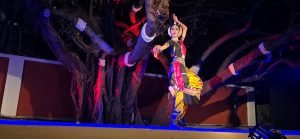
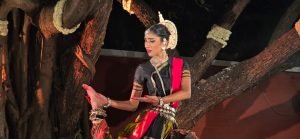
In the Abhinaya Prāṇasaṅginī Re by Banamali Das, Sharanya portrayed Krishna’s playful deception with delightful charm and nuance. Her expressive glances, emotional shifts, and effortless storytelling revealed maturity and
insight. Ankita Joshi’s soulful singing and G. Ramaprasad’s Mardala enriched the rustic lyricism of the composition by Sri Balakrishna Das, set to Guru Kelucharan Mohapatra’s choreography. This was followed by the Shiva
Panchakshara Stotram, where Sharanya embodied the majesty of Lord Shiva through controlled movements, meditative stances, and sculptural precision. Jatin Sahu’s ascetic vocal texture and Ramaprasad’s rhythmic grounding in Raga Bairagi and Tala Rupaka heightened the devotional mood.
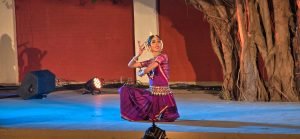

Post-intermission, she presented the celebrated Kirwani Pallavi, where Guru Kelucharan Mohapatra had woven the imagery of the Pahandi movements of Lord Jagannath during the Rath Yatra in Puri into the choreography. Sharanya’s poised execution, enhanced by the rhythmic complexities of Khemata Tala, was supported beautifully by Jatin Sahu and G. Ramprasad, creating a captivating synergy. The Ashtapadi Priye Charushile then revealed her ability to inhabit emotional depth with sensitivity and grace. The timeless music of Pandit Bhubaneswar Mishra and choreography of Guru Kelucharan Mohapatra offered a perfect canvas for her expression. The evening concluded with Moksha, where her movements opened into serenity and joyous abandon, symbolising spiritual liberation—a fitting conclusion to a performance steeped in devotion.
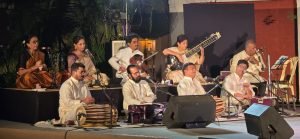
The musical ensemble elevated the evening with exceptional artistry. Manoj Desai’s expressive vocals enriched every composition with depth and emotional clarity, while Jatin Sahu’s soulful singing intensified the spiritual
atmosphere of the Shiva Stotram and Kirwani Pallavi. The exquisite voice of Ankita Joshi illuminated the Abhinaya segments with warmth and purity. Onthe mardala, G. Ramaprasad provided a vibrant rhythmic anchor, complemented by the thoughtful structuring of Rohan Dahale, whose contributions particularly enlivened the Tilak Kamod Pallavi. The melodic fabric of the performance was woven with finesse by Vijay Tambe’s flute, Aparna
Deodhar’s warm sitar passages, and Anup Kulthe’s sensitive violin, each adding emotional richness and tonal colour. Adding a rare and deeply cherished dimension to the evening was Guru Smt. Daksha Mashruwala herself, who sat with the musicians, playing the manjira with impeccable clarity and guiding the flow of the performance. Her presence—both as mentor and conductor—infused the presentation with a profound spiritual and artistic
resonance, enhancing every moment with her quiet mastery.

Sharanya’s Manchapravesh was a collective endeavour shaped by many generous hands. Guru Smt. Daksha Mashruwala deserves deep gratitude for nurturing Sharanya with unwavering discipline, love, and commitment to
Parampara. Sincere appreciation is also due to Namrata Mehta and Siddhi Waikar for their affectionate mentoring. The evening was further enhanced by Niranjan Jadhao’s sensitive lighting design, Ashutosh Joshi’s evocative
photography, Deep Pithwa & Team’s meticulous videography, and Mohan Rane’s impeccable sound engineering. The elegant costumes crafted by Raju Bhai / Gulambhai Tailor, and the thoughtful venue production by Samir Tanna and Tamanna Tanna of Satec Events added to the evening’s refinement. The warmth of Sangeet Mahabharati and the presence of Sharanya’s guru- bhens—Anuradha, Saachi, Neelam, Uloopi, and Nandini—infused the event with camaraderie and emotional strength. Sharanya Ghosh’s Manchapravesh was not merely a debut—it was a celebration of Parampara and a vivid affirmation of how tradition flows meaningfully from one generation to the next. What resonated most deeply was the beautiful reciprocation between Sharanya and her Guru, and between Sharanya and her illustrious family. She stands today not only as a promising dancer but as a young artiste grounded in values, discipline, humility, and an earnest quest for excellence. Her performance reaffirmed that with dedication, guidance, and inner sincerity, the language of Odissi continues to thrive through luminous young artistes like her. One hopes that her journey ahead continues to unfold with deeper learning, creative exploration, and fulfilling artistry.
Comments are closed.