

Will Vedanta Get Sijimali Mine? Questions Grow Over Government’s Handling of the Project
Local opposition to the Sijimali bauxite project raises questions over the Odisha government's commitment to Vedanta and the future of mining investments in the state.

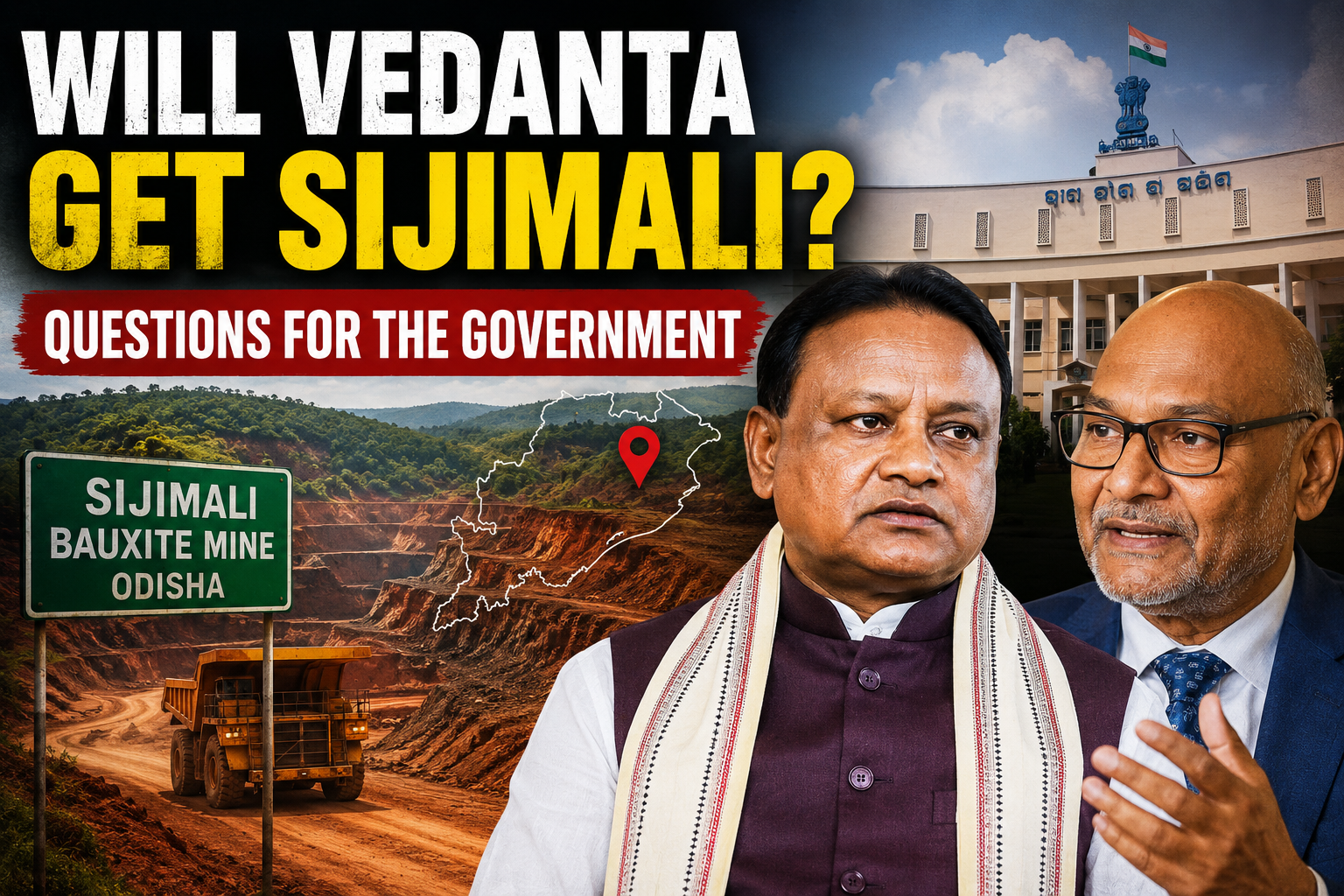
Rising Uncertainty Over Sijimali Bauxite Mine
The future of the Sijimali bauxite mine in Odisha has become increasingly uncertain amid strong opposition from local residents. The controversy has triggered several questions: Will Vedanta ultimately receive the mining project? If so, why is there such intense resistance? Did the government not anticipate public opposition before awarding the mine? And if it did, why was the project cleared in the first place?
These questions have gained prominence as protests against the project continue in the mining region.
Sijimali Was Auctioned to Vedanta in 2023
The Sijimali bauxite block was auctioned by the Odisha government on February 21, 2023. The mining lease covers approximately 1,549 hectares containing significant bauxite reserves and was awarded to Vedanta during the previous Biju Janata Dal (BJD) government.
According to the terms of the agreement, Vedanta was expected to extract around 9 million tonnes of bauxite annually. Including topsoil and waste material, the total annual mining activity was projected to reach approximately 18 million tonnes.
The project proposal also included plans to establish crushing units in Thuamul Rampur of Kalahandi district and Kashipur of Rayagada district.
Investment Made, But Opposition Intensifies
Critics argue that after collecting auction revenues from Vedanta, the government now appears reluctant to move forward decisively with the project.
Vedanta has already invested substantial amounts in the region, including the development of drinking water facilities and road infrastructure. However, local opposition has intensified, with residents expressing concerns about displacement, loss of land, and threats to their traditional livelihoods.
Observers note that these concerns cannot simply be dismissed, as local communities stand to bear the direct impact of any mining operations.
Who Is Responsible for the Current Deadlock?
The controversy has sparked debate over who should be held accountable for the current situation.
Traditionally, mining leases were granted by governments in exchange for royalty payments. However, under the auction-based system, companies pay significant amounts upfront to secure mining rights.
Supporters of Vedanta argue that the company acquired the block through a transparent auction process and therefore expects the government to ensure that contractual commitments are honored. Critics, however, contend that public concerns should have been addressed before the auction process was completed.
Questions Over Different Treatment of Mining Projects
The Sijimali controversy has also led to comparisons with other proposed mining projects in Odisha.
While uncertainty continues over Vedanta’s access to Sijimali, reports suggest that plans are moving ahead for the Kutrumali bauxite block, which has been linked to the Adani Group’s expansion plans in the state.
This has raised questions among some industry observers and local stakeholders about whether similar standards are being applied to all mining projects.
Vedanta’s Existing Presence in Odisha
Vedanta already has a significant industrial footprint in Odisha. The company operates one of the world’s largest aluminium smelters at Jharsuguda and runs a major alumina refinery at Lanjigarh in Kalahandi district.
The group has also proposed establishing the Vedanta University project in Puri district.
Supporters of the company argue that its existing investments and employment generation should be considered while evaluating future mining allocations in the state.
Anil Agarwal Meets Chief Minister Mohan Charan Majhi
Amid the ongoing uncertainty, Vedanta Chairman Anil Agarwal met Odisha Chief Minister Mohan Charan Majhi in Bhubaneswar on Wednesday.
According to official statements, discussions focused on the progress and implementation of Vedanta projects worth more than ₹1 lakh crore in Odisha. While details of the meeting were not disclosed, the interaction has attracted considerable attention given the ongoing debate surrounding the Sijimali mine.
The Questions Remain
Despite government assurances regarding industrial development and investment, several key questions remain unanswered.
If Sijimali was awarded through a legally conducted auction, what steps will the government take to address local concerns while honoring contractual obligations? Can a balance be achieved between industrial growth and community rights? And how will the government ensure consistency in its approach toward different mining projects?
As the controversy continues, the future of the Sijimali project is likely to remain a major issue in Odisha’s political and industrial landscape.
Comments are closed.