

Supreme Court Praises MGNREGA as an Effective Rural Employment Scheme
CJI Surya Kant-led three-judge bench calls MGNREGA a beneficial and effective scheme, while hearing a plea seeking payment of pending wages and compensation for delays.

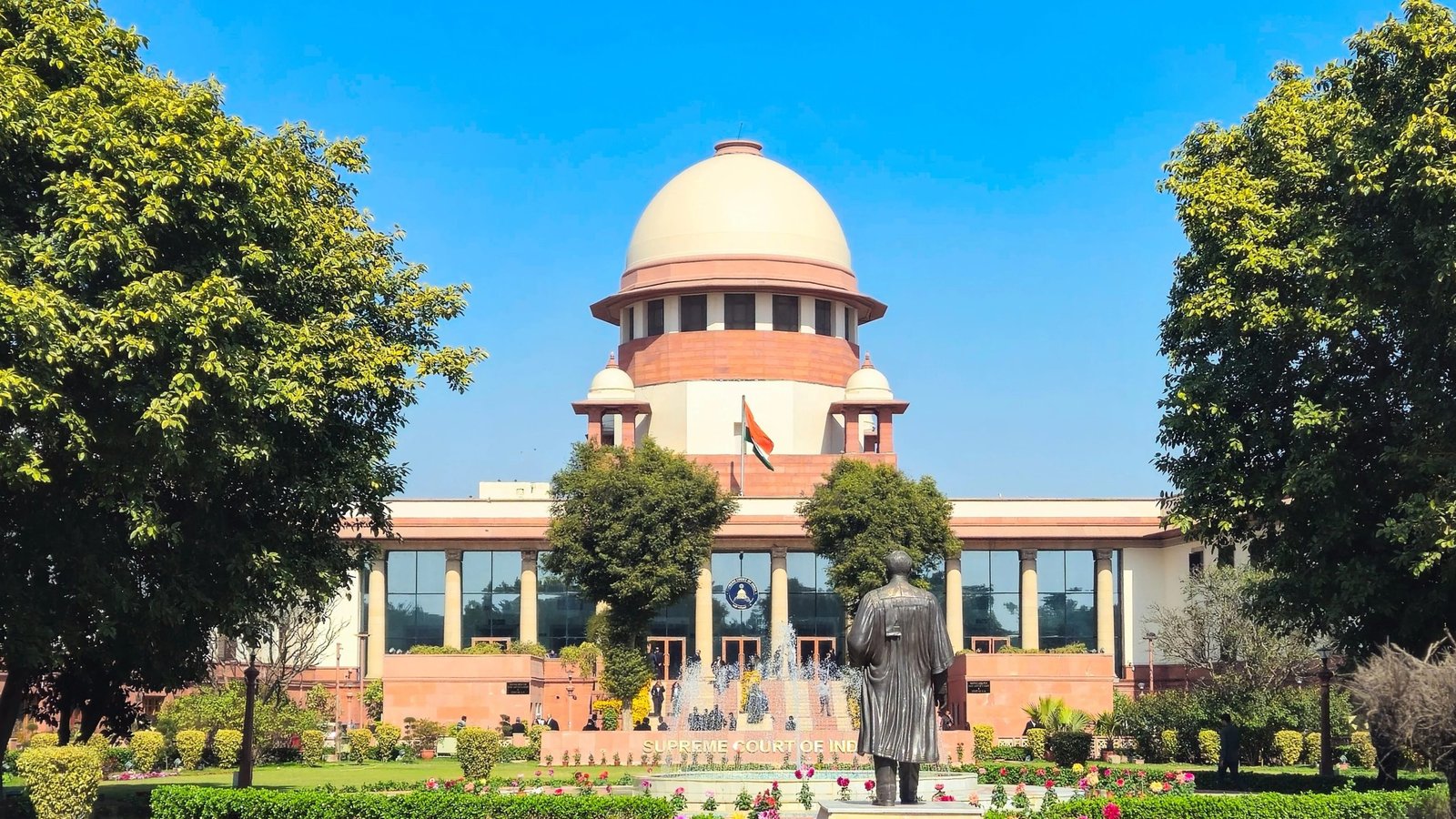
The Supreme Court has praised the Mahatma Gandhi National Rural Employment Guarantee Act (MGNREGA) as a beneficial and effective scheme that played an important role in providing employment opportunities in rural areas.
A three-judge bench headed by Chief Justice of India Surya Kant observed that MGNREGA had done a “remarkable job” in generating rural employment. The court also clarified that the scheme could not be viewed as a freebie or as an instrument for exploiting rural workers.
The observations came during the hearing of a petition filed by social activist Aruna Roy, seeking directions to the government to clear pending MGNREGA wages and provide appropriate compensation for delays.
The petition also sought recognition of the constitutional guarantee of employment for rural residents as a fundamental right under Article 21 of the Constitution.
However, the Supreme Court observed that the Constitution does not recognise the right to work as a fundamental right. The court described the objective as a democratic aspiration for which the State frames policies to provide employment opportunities.
The bench also considered concerns regarding minimum wages. It observed that raising the wage floor could potentially reduce employment opportunities, as wage levels are generally linked to local economic conditions.
The hearing also highlighted changes under the VB-GRAM-G scheme, which has replaced MGNREGA. According to the submissions before the court, rural employment generation has declined by around 50%, despite the annual guaranteed employment being increased from 100 to 125 days per household.
Another concern is the increased financial burden on states. The funding ratio has reportedly changed from 90:10 under the earlier arrangement to 60:40, significantly increasing the states’ share of expenditure.
The Supreme Court’s observations have renewed the debate over rural employment, wage protection and the implementation of employment guarantee schemes.
Comments are closed.