

UPI Charges Above Rs 2,000: How QR Payment Fees Compare Across Countries
From China’s QR payments to Japan’s JPQR and Indonesia’s QRIS, here’s how digital payment charges vary across countries

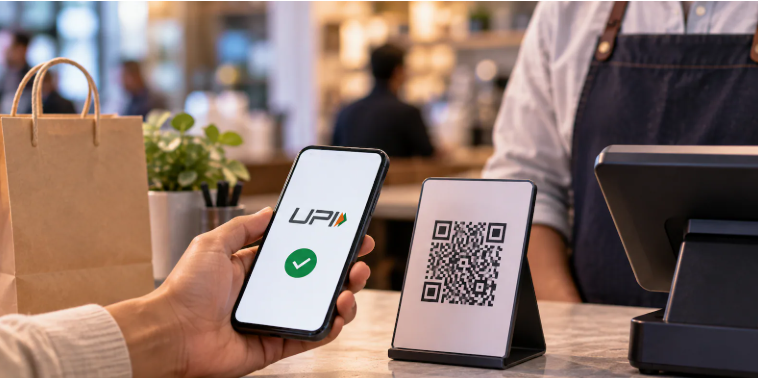
Speculation over the possibility of charges being imposed on UPI transactions above Rs 2,000 has sparked discussion among digital payment users in India. While no general charge has been introduced on regular UPI transactions, the debate has also drawn attention to how QR-based digital payments are charged in other countries.
QR code payments have become increasingly popular across the world, but the fee structure varies significantly depending on the country, payment network and type of transaction. In many markets, consumers can make small QR payments free of charge, while merchants may have to pay processing or service fees.
India
In India, person-to-person (P2P) UPI transactions are generally free for users. QR-based payments made to small merchants are also widely used without a direct charge to customers.
However, merchant discount rate (MDR) and the cost of processing certain payment instruments remain subjects of policy discussions, particularly for higher-value commercial transactions. International UPI transactions may also involve foreign exchange conversion or other applicable charges, depending on the service and destination.
China
China has a highly developed QR payment ecosystem, led by platforms such as Alipay and WeChat Pay. QR payments are generally convenient for consumers, while merchants may be charged service or processing fees depending on the payment platform and type of transaction.
For commercial transactions, merchant fees can be around 0.6 per cent in some arrangements, although the exact rate varies by provider and merchant category.
Sri Lanka
Sri Lanka operates LANKAQR, its national QR-based payment system. While small-value transactions can be made without direct charges to customers, fees may apply to certain higher-value or commercial transactions. Merchant charges can vary depending on the payment service and transaction type.
Japan
Japan’s JPQR system provides a unified QR code framework that allows merchants to accept payments through different services. Customers generally do not pay a separate fee for making QR payments, while merchants may incur charges depending on the payment service used.
Merchant processing charges can vary considerably, with some services charging rates in the range of 1.5 to 3.25 per cent.
Indonesia
Indonesia’s national QR payment system, QRIS, has helped expand digital payments among small businesses. Merchant fees are structured according to transaction categories, with small businesses receiving favourable treatment under the system.
The relatively low cost compared with traditional card payment networks has contributed to the growing adoption of QR payments among merchants.
US, Canada and Europe
Unlike India, the US, Canada and several European markets do not generally operate a single nationwide QR payment system equivalent to UPI. QR payments are often linked to private wallets, payment applications or credit and debit card networks.
As a result, merchants can face processing fees that may range from around 1.5 to 3.5 per cent, depending on the provider and payment method.
Latin America
QR payments have also expanded rapidly across several Latin American markets through private payment processors and regional fintech networks. Merchant processing fees can vary widely, with rates of around 1 to 3 per cent possible depending on the country, provider and transaction type.
At the same time, static QR codes used for simple money transfers can be free in several markets.
How QR Payment Charges Differ
The global QR payment landscape shows that there is no single model for charging users or merchants. In many countries, consumers can make QR payments without paying a separate transaction fee, while the payment service provider charges the merchant for processing the transaction.
The structure also depends on whether the payment is made through a national instant-payment network, private digital wallet, credit card or other payment infrastructure.
Therefore, comparisons between India’s UPI system and QR payment systems in other countries need to take into account the underlying payment network, transaction type, merchant category and who bears the processing cost.
Comments are closed.