

Parbati Giri Projects Fail to Deliver Assured Irrigation Despite Heavy Investment
KSS flags water shortages and system-level failures; seeks technical audit of all nine schemes


AJIT PANDA(SENIOR JOURNALIST): The Parbati Giri Mega Lift Irrigation Projects in Nuapada district are unable to provide irrigation according to their designed potential, raising concerns over the effectiveness of substantial public investment. While some schemes face acute source-water shortages, others appear to be underperforming despite adequate water availability, pointing to possible deficiencies in infrastructure and management.

There are 9 mega projects in Nuapada district. One farmers’ organisation of Nuapada named Krushak Sakti Sangathan (KSS),.conducted a field assessment following complaints from farmers in September, which found that projects such as Bakharmal, Amodi, Gadramal, Baijalpir and Karlakhamar were constrained by falling river levels. In contrast, Boldha and Deodarha failed to deliver adequate irrigation despite comparatively favourable water conditions.
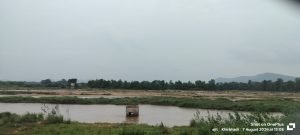
The Bakharmal and Amodi projects in Nuapada block draw water from the Jonk River and are designed to provide irrigation to about 2000 hectares of lands of several villages and hamlets. However, the river has receded below the intake openings, leaving the intake wells unable to sustain pumping.
“The intake well becomes empty within a few minutes of switching on the pump because the river has fallen below the inlet openings. As a result, the pumps cannot operate continuously,” said the operators.

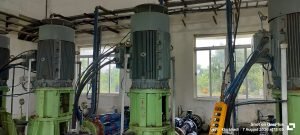
Similar conditions were observed at Gadramal, Baijalpir and Karlakhamar in Sinapali block. During a field inspection by this journalist in mid-September, river levels at Baijalpir and Karlakhamar were around one foot below the intake openings, while the river stretch near the Gadramal intake well was dry. The pump operators said that available water in the intake wells could be exhausted within three to four hours of pumping, with sand also entering the system.
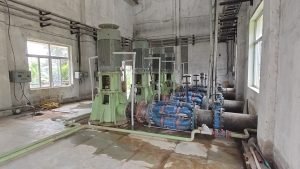
Although the machinery appeared generally maintained, routine maintenance could not overcome the lack of dependable water at the intake points. Farmers fear irrigation coverage could fall below 30 per cent during dry spells unless technically viable water-retention measures are developed.
Boldha and Deodarha raise fresh concerns
The situation at Boldha and Deodarha points to a different problem. Their intake wells are submerged in the Indra River, indicating adequate water availability during the inspection. Yet irrigation delivery remained below expectations.
The farmers of Boldha said, only 27 outlets are there, against 84 envisaged in the project design. The shortfall raises questions about the completeness and functionality of the distribution network, electricity supply, pumping hours and coordination between pumping stations and field outlets.
The Executive Engineer of the mega irrigation projects, whose office h
as been shifted from Titlagarh of Balangir district to Khariar of Nuapada recently, when contacted expressed his ignorance about the shortcomings. “We will conduct a detailed inquiry to see what has gone wrong”, said the EE, who has taken the charge recently.
The web information reveals that the projects are intended to provide supplementary Kharif irrigation to upland, rain-dependent farms where conventional gravity-based canal irrigation is not feasible. They use high-capacity vertical turbine pumps and pressurised pipelines to convey river water to agricultural fields.
The stated baseline cost is ₹1,598.90 lakh (about ₹15.99 crore) per project, with core civil and electromechanical works valued at ₹1,380.31 lakh each. For nine projects, the combined baseline cost would be approximately ₹150 crore if the quoted per-project figure applies uniformly.
KSS has called for a comprehensive technical and field-level audit of all nine projects to establish the actual irrigated area, seasonal water availability, pump performance, electricity supply and functionality of pipelines and outlets. “We have submitted a detailed report to the CM, Odisha in the Jana Sunani Portal to conduct inquiry, said Sanjay Tiwari, convenor of the KSS. He said that he had also filed an RTI application with the agency seeking the information, but the requested information had not yet been provided despite the expiry of the stipulated time limit.
“The audit should distinguish source-water constraints from engineering, operational and distribution failures and fix responsibility for corrective action. The key measure of success, farmers argue, is not the installed pumping capacity or expenditure incurred, but whether water reliably reaches their fields when crops need it” demanded Tiwari.
“Our small lift irrigation points, equipped with 10-HP pumps, can irrigate around 50 acres and can be repaired quickly when problems arise. In comparison, these mega projects are proving less efficient,” villagers said.
Comments are closed.