

Nuclear Deal on Horizon: Why US-Saudi Tie-Up Raises Red Flags Against Iran
Proposed agreement allowing uranium enrichment in Saudi Arabia raises proliferation fears and questions over regional stability amid escalating tensions with Iran.

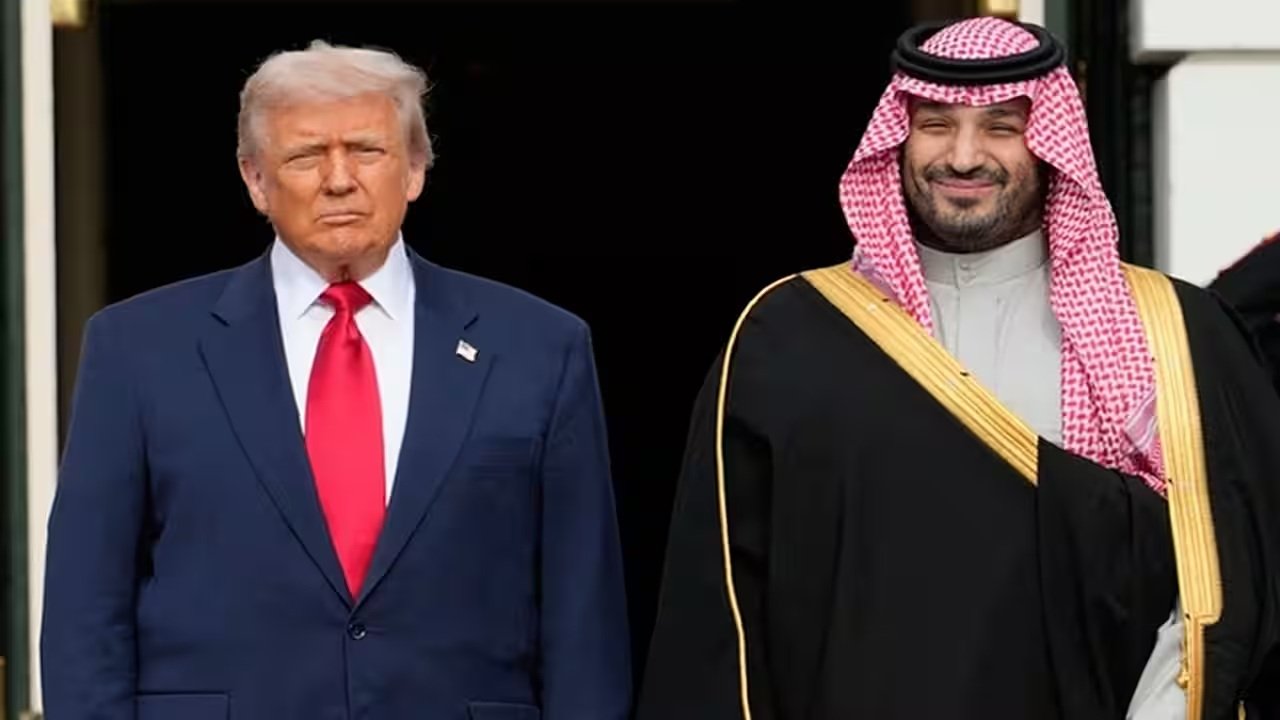
The United States is reportedly moving closer to signing a landmark nuclear cooperation agreement with Saudi Arabia, a development that could significantly alter the strategic balance of power in the Middle East.
According to US congressional documents and analysis by the Arms Control Association, the proposed agreement may allow Riyadh to enrich uranium on its own soil — a sensitive capability that has raised alarms among non-proliferation experts.
Bipartisan Push in Washington
Both former US President Joe Biden and current President Donald Trump are said to support advancing the deal, which would permit Saudi Arabia to access American nuclear technology for civilian energy purposes.
However, analysts warn that granting Saudi Arabia domestic uranium enrichment capability — including the use of centrifuges — could potentially lay the groundwork for a future weapons program.
Saudi Crown Prince Mohammed bin Salman has previously stated publicly that if Iran were to acquire a nuclear weapon, Saudi Arabia would follow suit — a remark that continues to fuel regional anxieties.
Regional Security Complications
The development comes amid rising tensions between the United States and Iran, whose nuclear ambitions have long been a source of global concern.
Complicating matters further, Saudi Arabia recently signed a mutual defence agreement with nuclear-armed Pakistan. Pakistan’s defence minister reportedly indicated that Islamabad could extend nuclear support to Riyadh if required — a statement that has added to speculation about evolving security alliances in the region.
Meanwhile, Israel is widely believed to be the only nuclear-armed state in the Middle East, although it has never officially confirmed its nuclear arsenal.
Safeguards and Oversight
The proposed deal is expected to include monitoring provisions under the supervision of the International Atomic Energy Agency (IAEA). These safeguards would reportedly cover uranium enrichment, fuel fabrication, and reprocessing activities.
The IAEA has confirmed that discussions are ongoing and stated that it remains prepared to conduct inspections should the agreement move forward.
Proliferation Fears and Strategic Debate
Critics argue that while uranium enrichment does not automatically result in a nuclear weapon, it represents a critical technological threshold. For example, Iran currently enriches uranium up to 60% purity — below the roughly 90% level typically required for weapons-grade material — but close enough to raise international alarm.
The central question now confronting policymakers is whether the United States is strengthening a key regional ally or inadvertently accelerating a nuclear arms race in one of the world’s most volatile regions.
As negotiations continue, the outcome of the US–Saudi nuclear cooperation deal could reshape Middle Eastern geopolitics for decades to come.
Comments are closed.