
Eclipse on Phalguna Purnima: Shubh Muhurat and Vidhi for Holika Dahan 2026
Rare 3-Hour-27-Minute Lunar Eclipse to Coincide with Holika Dahan, Adding Unique Spiritual and Astrological Significance to Holi 2026

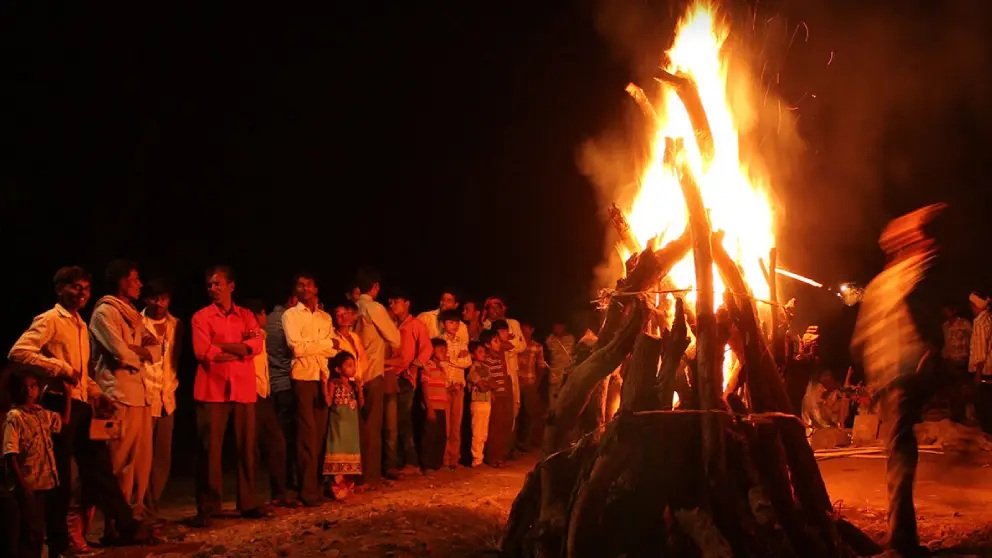
With the vibrant festival of Holi around the corner, 2026 is set to witness a rare celestial coincidence. The longest penumbral lunar eclipse of the year will occur on March 3, 2026, coinciding with Holika Dahan, adding a unique spiritual dimension to the celebrations.
Rare Lunar Eclipse on Holika Dahan
A penumbral lunar eclipse lasting 3 hours and 27 minutes will take place on March 3, 2026. The eclipse will begin at 3:20 PM and conclude at 6:47 PM, and will be visible across India.
The astronomical event coincides with Phalguna Purnima, the full moon night that marks Holika Dahan — the ritual bonfire symbolizing the triumph of good over evil in the legend of Holika and Prahlada.
Astrological Significance
Astrologers note that the eclipse will occur in Singh Rashi (Leo) and Purva Phalguni Nakshatra, enhancing its astrological importance.
Although lunar eclipses are traditionally associated with the Sutak period (a phase of ritual impurity), experts have clarified that the auspicious muhurat for Holika Dahan will not directly clash with the peak of the eclipse, allowing rituals to proceed as scheduled.
Preparations and Ritual Guidelines
Devotees are advised to begin preparations early in the day:
-
Wake up during Brahmamuhurta
-
Take a purifying bath and wear clean clothes
-
Take a vrata sankalp (sacred vow)
-
Offer prayers to deities
Items typically arranged for the ritual include wood, dung cakes, roli, akshat (rice grains), flowers, raw thread, turmeric, gulal, wheat stalks, barley, gram, and coconut.
Before lighting the bonfire, devotees circle a sacred thread around the Holika structure, offer roli-akshat and water, and then ignite the fire. Family members traditionally perform three or seven parikramas (circumambulations) after the fire is lit.
Blending Faith and Astronomy
The convergence of a long-duration lunar eclipse with Holika Dahan is a rare occurrence. While the eclipse represents a significant astronomical event, the festival continues to emphasize devotion, purification, and celebration.
This celestial alignment during Phalguna Purnima deepens the spiritual atmosphere ahead of Holi, observed the following day. For many devotees, it serves as a reminder of the harmony between cosmic phenomena and ancient traditions — where science and spirituality meet under the same moonlit sky.
Comments are closed.