
Black Rain Over Iran Triggers Health Alerts; Regional Pollution Risks Eyed
Strikes on Tehran Oil Depots Trigger Black Rain and Toxic Smog, Raising Health and Environmental Concerns

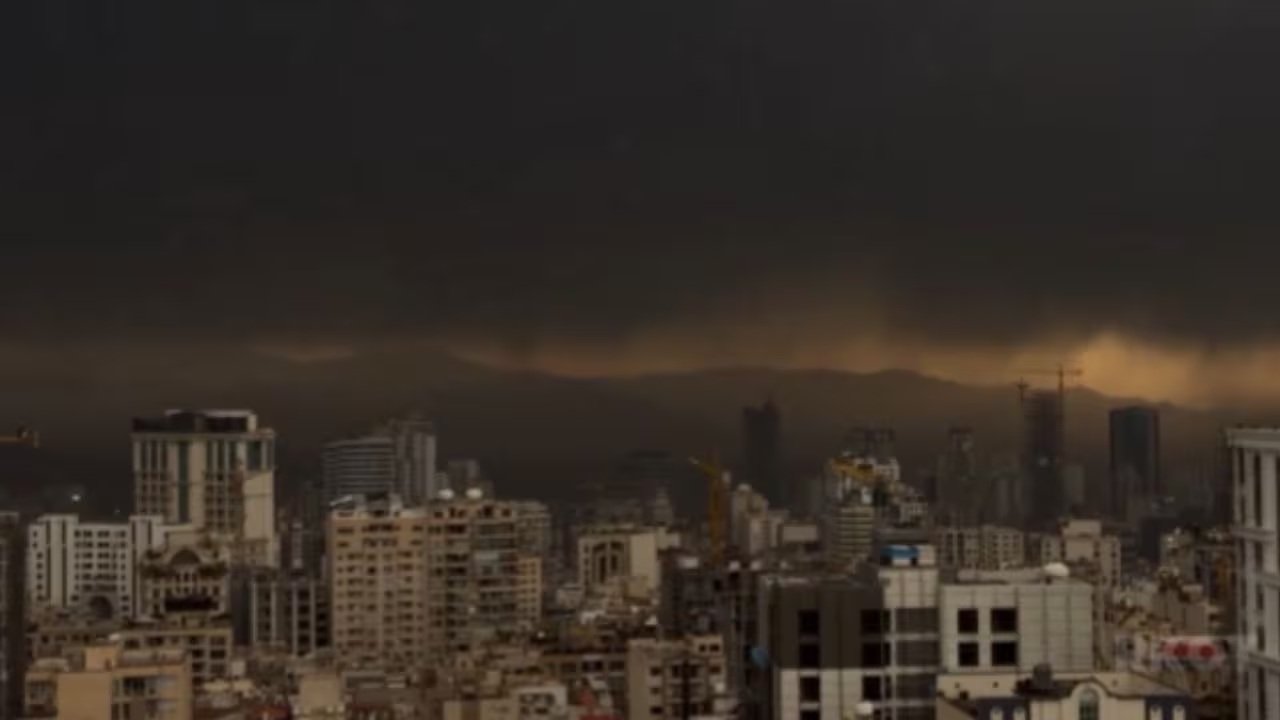
Thick black clouds and toxic “black rain” have spread over parts of Iran following strikes on oil storage depots and refineries, raising immediate and long-term health concerns. Scientists warn that the fallout could even affect neighboring regions, including India’s west coast, depending on wind patterns.
Fires at Oil Facilities Send Hazardous Pollutants Into the Air
According to officials, fires at several fuel facilities around Tehran released massive amounts of soot, hydrocarbons, sulphur, and nitrogen oxides into the atmosphere. These pollutants can mix with moisture to form acidic rain.
Residents reported darkened skies at noon, difficulty breathing, and an oily film coating streets and vehicles. The World Health Organization (WHO) issued warnings about the poisonous gases and black rain, noting that exposure can cause chemical burns, lung damage, and long-term health effects.
Scope of the Strikes
At least four oil facilities were reportedly targeted, sending towering columns of flames and smoke into the sky. Authorities urged residents to stay indoors and avoid contact with rain, which could be corrosive and hazardous to health.
Environmental analysts have emphasized that the combination of soot with sulfur and nitrogen compounds is far more dangerous than typical urban smog. There are additional concerns about contamination of water sources and soil if residues settle in the environment.
Potential Cross-Border Risks
While the immediate effects are concentrated in Iran, atmospheric scientists caution that fine particles from such chemical plumes can travel long distances under certain weather conditions. Indian forecasters reportedly monitor these plumes during dust storms and wildfire events as a precaution.
Public Health Recommendations
International health agencies recommend the following precautions during severe chemical smog events:
-
Stay indoors and avoid exposure to rain.
-
Wear tight-fitting protective masks if venturing outside.
-
Rinse any surfaces or skin that come into contact with contaminated rainwater using clean water.
Experts stress that vigilance is crucial, as the toxic mix of pollutants poses both immediate and long-term health risks.
Comments are closed.