

Ethanol May Soon Enter Indian Kitchens as Cooking Fuel; Government Preparing Policy Framework

Petroleum Ministry plans dedicated ethanol stoves, fuel kiosks and possible subsidies as India looks to use surplus ethanol for household cooking and reduce dependence on LPG imports.

0

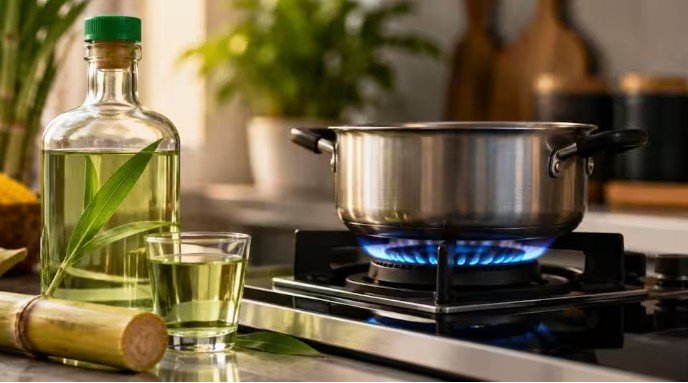
Ethanol, which is currently blended with petrol under India’s E20 fuel programme, may soon find a place in household kitchens as an alternative cooking fuel. The Ministry of Petroleum and Natural Gas is preparing a policy framework to promote ethanol as a clean cooking fuel, with the roadmap expected to be finalised by September.

The move comes as India produces far more ethanol than is currently required for fuel blending. The country now produces around 20 billion litres (2,000 crore litres) of ethanol annually. Of this, nearly 11 billion litres (1,100 crore litres) are used for the 20% ethanol blending (E20) programme. Another 3.5 billion litres (350 crore litres) are consumed by the liquor, pharmaceutical and chemical industries, leaving nearly 6 billion litres (600 crore litres) available for other uses.

To utilise this surplus, the government plans to introduce ethanol-based cooking fuel for households. Specially designed ethanol stoves will be developed for domestic use, and the government is considering offering either a one-time subsidy on the stove or subsidies on the fuel to encourage adoption.

State-run oil marketing companies have been directed to undertake research and development of ethanol-compatible cooking stoves in collaboration with technology partners and research institutions.

To ensure easy access to the fuel, the government also plans to install dedicated ethanol kiosks or ATM-style dispensing units at petrol pumps, allowing consumers to purchase ethanol conveniently.

Officials believe the initiative could significantly reduce India’s dependence on imported crude oil and LPG, helping the country save valuable foreign exchange. The proposal is also seen as a way to strengthen India’s energy security, particularly amid global supply uncertainties triggered by geopolitical conflicts, including tensions in the Middle East.

In addition to domestic consumption, the government has asked oil companies to explore export opportunities for surplus ethanol to neighbouring and regional markets such as Nepal, Bangladesh and Indonesia, creating an additional avenue for the country’s growing ethanol production.

Comments are closed.