
Mahanadi Water Dispute May See Resolution in Three Months; Centre Forms High-Level Committee
High-level committee to submit its report to the Mahanadi Water Disputes Tribunal within three months; focus on equitable water sharing and lean-season releases to Odisha.

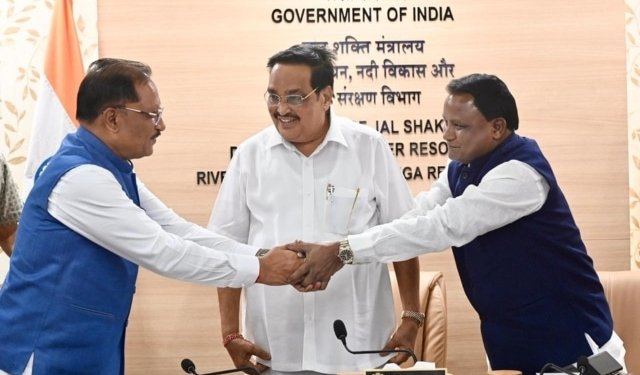
The decades-long Mahanadi water dispute between Odisha and Chhattisgarh may move closer to a resolution, with the Centre constituting a high-level committee that has been asked to submit its report to the Mahanadi Water Disputes Tribunal within three months.
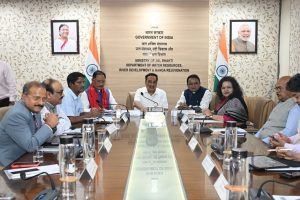
The decision was taken at the first-ever high-level meeting chaired by Union Jal Shakti Minister C.R. Patil, attended by Odisha Chief Minister Mohan Charan Majhi and Chhattisgarh Chief Minister Vishnu Deo Sai. The committee, headed by the Chairman of the Central Water Commission (CWC), will examine key issues related to water sharing and recommend a framework for equitable river management while safeguarding the interests of farmers in both states.
The development has raised hopes of ending a dispute that has remained unresolved for years. However, questions remain over the committee’s recommendations, particularly regarding how much water Chhattisgarh will release to Odisha during the non-monsoon season, when water scarcity severely affects irrigation and agriculture in downstream areas.
According to data submitted by the Odisha government before the Tribunal, based on 39 years of hydrological records, the average annual inflow into the Hirakud Reservoir is 32.83 million acre-feet (MAF), of which 27.76 MAF originates from Chhattisgarh.
During drought years or under 90% dependability conditions, however, the inflow from Chhattisgarh to Hirakud falls to 21.82 MAF, significantly impacting water availability in Odisha. The data further states that the average annual flow at Naraj is 56.29 MAF, while the total flow across the Mahanadi basin, including the Chilika region, is estimated at 62.36 MAF.
Former water resources experts have argued that during the lean season, Chhattisgarh should ensure the release of 2 MAF of water to Hirakud and 1.74 MAF at the inter-state border to protect Odisha’s irrigation and drinking water needs.
Significantly, nearly eight years after the constitution of the Mahanadi Water Disputes Tribunal, both states have reportedly agreed on the methodology for measuring river flows, removing a major hurdle in the adjudication process. The focus now shifts to the committee’s report and whether it can pave the way for a lasting and equitable settlement of the long-pending interstate water dispute.
Comments are closed.