

Why Are Young IAS and IPS Officers Quitting Their Prestigious Government Jobs?
Resignations by young IAS and IPS officers across several states spark debate over political ambitions, corporate opportunities and changing career priorities.

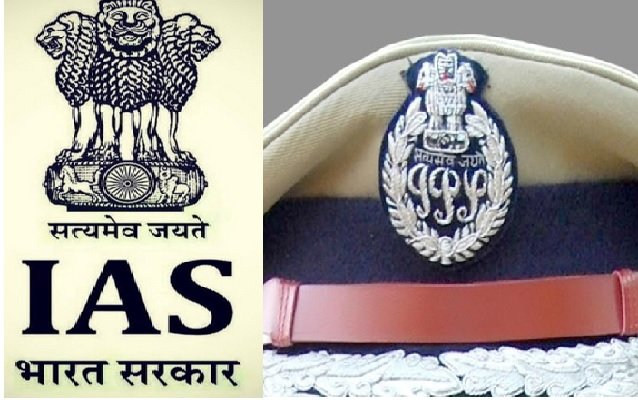
The resignation of 2013-batch Uttar Pradesh cadre IAS officer Divya Mittal on August 30 has once again triggered a debate over why young civil servants are leaving prestigious government positions. Over the past 14 months, at least seven IPS officers under the age of 40 have reportedly resigned from service, raising questions about changing career priorities among a new generation of bureaucrats.
The trend has also drawn attention to states such as Uttar Pradesh, Bihar and Odisha, where several high-profile resignations have recently made headlines. However, data from the Department of Personnel and Training (DoPT) does not indicate a state-wise surge in IAS or IPS resignations, as its official reports do not provide comprehensive state-wise resignation figures.
Uttar Pradesh Sees High-Profile Resignation
Uttar Pradesh has the country’s largest IAS cadre, with 652 sanctioned posts. The latest prominent case is that of Divya Mittal, who resigned voluntarily after around 13 years of service.
A graduate of IIT Delhi and IIM Bangalore, Mittal had reportedly left a lucrative job in London to pursue a career in the civil services. She later gained recognition for her administrative work, including efforts to provide tap water to Lahuriadih village in Mirzapur after decades of waiting.
Bihar and Odisha Also Witness Resignations
In Bihar, IPS officers Nurul Hoda and Kamya Mishra have resigned from service. Kamya Mishra’s resignation has been linked to speculation about her possible entry into politics, while Nurul Hoda had taken a political position in opposition to the Waqf Board Bill.
In Odisha, 37-year-old IPS officer Jagmohan Meena, who was posted as DCP in Bhubaneswar, also recently resigned.
Several young IPS officers from other states have also left the service. They include Abhishek Tiwari from Madhya Pradesh, Siddharth Kaushal from Andhra Pradesh and Lokeshwar Singh from Uttarakhand.
Why Are Officers Leaving?
There appear to be several reasons behind the resignations.
1. Political ambitions and ideological reasons:
Some officers are leaving government service to explore opportunities in politics or express their political views more openly.
2. Corporate and international opportunities:
Better financial packages, professional exposure and opportunities outside government are another major factor. Abhishek Tiwari reportedly moved towards the cybersecurity sector, while Siddharth Kaushal joined the corporate sector. Lokeshwar Singh reportedly moved abroad to work with the United Nations.
3. Personal fulfilment and new career paths:
After serving for 10–15 years, some officers may choose to pursue long-held personal interests, including writing, social work or entrepreneurship. Divya Mittal’s resignation is being viewed in this context, as she has also recently published a book.
The recent resignations do not necessarily indicate a broad-based crisis in the civil services. Instead, they may reflect changing career aspirations, greater private-sector opportunities and a growing willingness among young officers to explore careers beyond traditional government service.
Comments are closed.