India’s First Hydrogen-Powered Train to Begin Trial Operations on July 17
Indian Railways' first hydrogen-powered train will begin trial operations on July 17, marking a major step towards clean, zero-emission and sustainable rail transportation.

Trending

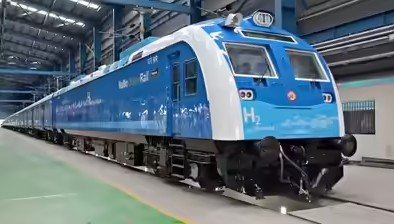
Indian Railways is set to script a new chapter in its history as the country’s first hydrogen-powered train is scheduled to begin trial operations on July 17. The launch marks a significant step towards sustainable mobility and places India among a select group of nations developing hydrogen-based railway technology.
Hydrogen-powered trains are increasingly being recognised worldwide as an environmentally friendly alternative to conventional diesel-powered rail systems. With this initiative, India joins countries such as Germany, Japan, China and the United States, which have introduced hydrogen-powered rail services or are actively developing the technology.
The new train is claimed to be the world’s longest 10-coach hydrogen-powered broad gauge train and the most powerful, with a total traction capacity of 2,400 kW. The train consists of two 1,200 kW Driving Power Cars (DPCs) and eight passenger coaches.
Its design includes dedicated space for hydrogen storage cylinders, fuel cell systems, batteries and control equipment. The train is expected to cover around 250 kilometres on a single refuelling, with a maximum test speed of 120 kmph and an operational speed of about 75 kmph.
To enhance safety, 54 hydrogen cylinders have been installed—27 at the front and 27 at the rear of the train.
The hydrogen train has been designed by the Research Design and Standards Organisation (RDSO), Lucknow, and manufactured at the Integral Coach Factory (ICF), Chennai. Indian Railways says the project reflects the country’s commitment to the ‘Atmanirbhar Bharat’ initiative by developing advanced railway technology domestically.
Unlike conventional trains, the hydrogen-powered train generates its own electricity through hydrogen fuel cell technology. Hydrogen reacts with oxygen inside the fuel cell to produce electricity, with water vapour and heat as the only by-products.
Because it produces zero carbon dioxide (CO₂) emissions, hydrogen fuel cell technology is considered one of the cleanest alternatives for railway transportation. The project is expected to support India’s long-term goal of reducing carbon emissions while promoting greener and more sustainable public transport.
Recover your password.
A password will be e-mailed to you.
Comments are closed.