

Delhi Air Pollution: AQI Crosses 300 in Several Areas, GRAP Stage 1 Implemented
Delhi's AQI crosses 300 in Jahangirpuri and Vivek Vihar as air pollution worsens. GRAP Stage 1 measures implemented amid rising health concerns.

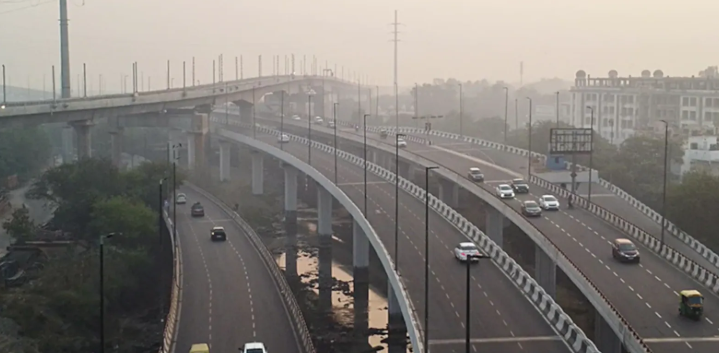
Air pollution has become a growing concern in the national capital as the Air Quality Index (AQI) has reached alarming levels in several areas. With bright sunshine during the day and cooler conditions at night, air quality has deteriorated across multiple locations in Delhi.
According to the reported figures, Jahangirpuri recorded the highest AQI at 309, followed by Vivek Vihar at 306. Both areas fall under the ‘very poor’ air quality category. Several other parts of the capital have also recorded AQI levels above 200, indicating poor air quality.
Jahangirpuri Records Highest AQI
Jahangirpuri recorded an AQI of 309, while Vivek Vihar registered 306. Other areas reporting high pollution levels include Mandir Marg and Narela, both at 280, Siri Fort at 276, Bawana at 275 and Alipur at 273.
Mundka recorded an AQI of 265, followed by Narela’s NIH area at 260, Talkatora Garden at 254 and Wazirpur at 253.
Air quality also remained poor across several prominent locations, including Delhi University’s North Campus, which recorded an AQI of 247, and IIT Delhi, where the index stood at 244.
Najafgarh recorded an AQI of 241, while Jawaharlal Nehru University (JNU) registered 239. The area around Major Dhyan Chand National Stadium recorded 238.
Anand Vihar reported an AQI of 237, followed by Burari Crossing at 231 and Ashok Vihar at 223. Near Terminal 3 of Indira Gandhi International Airport, the AQI stood at 216, while Aya Nagar recorded 215 and Vasundhara Enclave registered 209.
Some Areas Record Relatively Better Air Quality
Despite the widespread pollution, some locations reported comparatively lower AQI levels.
Burari recorded an AQI of 190, followed by Karala at 186, IHBAS in Dilshad Garden at 182 and Nangloi at 181. Nehru Nagar registered 177, Jharoda Kalan 170 and IGNOU Maidan Garhi 169.
Uttam Nagar recorded an AQI of 167, while Lodhi Road registered 159 and the Delhi Cantonment area recorded 155. The India Meteorological Department’s Lodhi Road station reported an AQI of 147, while Badarpur and Sri Aurobindo Marg recorded 145 and 144, respectively.
Maidan Garhi recorded an AQI of 129, while Tikri Colony reported the lowest reading among the listed locations at 122.
What Do the AQI Levels Mean?
Under India’s national air quality classification, an AQI between 201 and 300 is categorised as ‘poor’, while readings between 301 and 400 fall under the ‘very poor’ category.
The high AQI readings in Jahangirpuri and Vivek Vihar indicate particularly unhealthy air quality conditions. Prolonged exposure to polluted air can aggravate respiratory problems and affect overall health.
Children, older people and individuals with respiratory conditions are particularly vulnerable to elevated pollution levels. Residents are advised to limit prolonged outdoor exposure, avoid strenuous outdoor exercise when pollution levels are high and follow relevant health advisories.
GRAP Stage 1 Measures Implemented
Amid rising pollution levels, Stage 1 of the Graded Response Action Plan (GRAP) has been implemented in Delhi, according to the information provided.
The measures are intended to address air pollution through preventive and enforcement-related steps. Restrictions on construction activities have also been reported as part of the measures mentioned in the source information.
With several monitoring stations recording poor or very poor air quality, pollution remains a major concern for Delhi residents. Authorities and citizens will need to follow applicable pollution-control measures to help limit further deterioration in air quality.
Comments are closed.