

Humans May Soon Live on the Moon: NASA Plans Permanent Lunar Settlements with Homes, Water and Oxygen
Scientists Are Developing Technologies to Build Houses Using Lunar Soil, Generate Electricity and Extract Water and Oxygen to Make Long-Term Human Life on the Moon Possible.

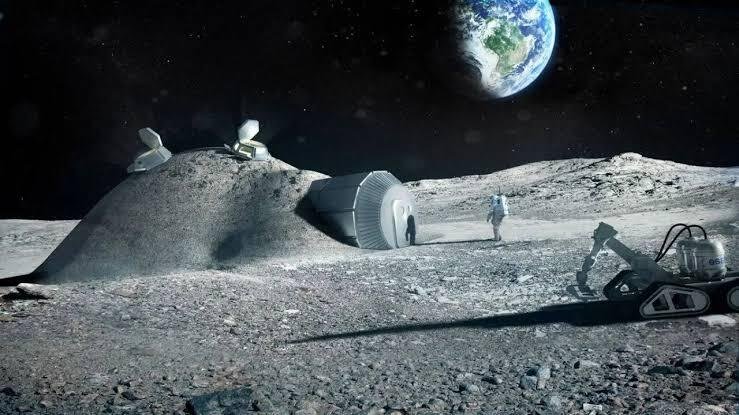
The dream of humans living beyond Earth may soon become a reality, with scientists and space agencies making ambitious plans to establish permanent human settlements on the Moon. From building houses using lunar soil to generating electricity, extracting water and producing oxygen, several technologies are being developed to make long-term human habitation on the Moon possible.
NASA, along with other international space agencies and private companies, is actively working on different aspects of lunar settlement. The primary objective is to create a self-sustaining environment where astronauts can live and work for extended periods without depending entirely on supplies from Earth.
Houses to Be Built Using Moon’s Soil
One of the biggest challenges in establishing human settlements on the Moon is transporting construction materials from Earth. Sending heavy building materials into space is extremely expensive.
To overcome this challenge, scientists are exploring ways to use the Moon’s own soil and rocks for construction. The lunar soil, commonly known as regolith, could be converted into strong building materials using advanced technologies such as laser processing and 3D printing.
Researchers are studying methods to transform lunar dust and rocks into durable structures that could serve as homes and research facilities for future astronauts.
Natural Lava Tubes Could Provide Protection
Apart from constructing buildings on the lunar surface, scientists are also exploring the possibility of using naturally occurring underground lava tubes.
These tunnels could provide protection against harmful cosmic radiation, micrometeorite impacts and extreme temperature fluctuations on the Moon. Their natural structure may make them suitable locations for future human habitats.
Solar and Nuclear Energy to Generate Electricity
Reliable electricity will be essential for maintaining a permanent human settlement on the Moon.
Scientists are planning to install solar panels in areas near the lunar south pole that receive sunlight for extended periods.
Alongside solar power, NASA has set a target of developing a small nuclear power system with a capacity of around 40 kilowatts on the Moon by 2030. Such a system could provide a reliable electricity supply even during the long lunar nights when solar energy is unavailable.
Water and Oxygen to Be Extracted from Lunar Ice
Water availability is another major requirement for human survival on the Moon. Scientists have found evidence of water ice in some permanently shadowed craters near the lunar polar regions.
Plans are underway to use robotic equipment to extract this ice and process it into drinking water. Water could also be separated into hydrogen and oxygen through electrolysis.
Meanwhile, researchers are exploring techniques to extract oxygen from oxides present in lunar soil. The oxygen could support human breathing, while hydrogen and oxygen obtained from water could potentially be used to produce rocket fuel.
Permanent Human Settlement on the Moon: A Future Possibility
Although these technologies are still at different stages of research and development, they could play a crucial role in establishing permanent human settlements on the Moon.
If successful, these initiatives could transform the Moon from a destination for scientific exploration into a place where humans can live and work for extended periods. The development of such settlements could also pave the way for future human missions to Mars and other destinations in space.
Comments are closed.