
Xi’s Army Overhaul: One Top Officer Booted Every 10 Days in Corruption Blitz
Loyalty over legacy as sweeping anti-corruption drive reshapes the People’s Liberation Army

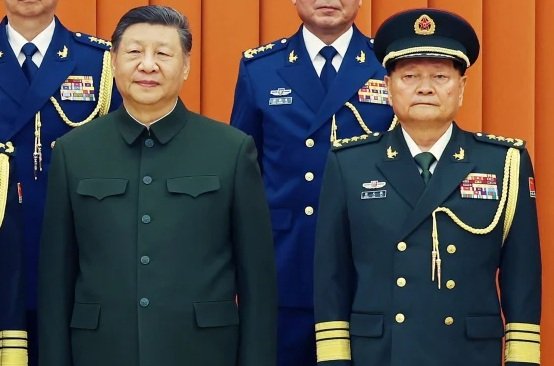
China’s President Xi Jinping has intensified a dramatic purge of the People’s Liberation Army (PLA), with the latest and most consequential casualty being General Zhang Youxia, the vice chairman of the Central Military Commission (CMC) and the most senior uniformed officer in the Chinese military. Xi’s anti-corruption drive, ongoing since 2023, has now ensnared some 80 senior officers — averaging about one per week — and spans multiple branches of the PLA, from ground forces to strategic rocket units.
In official statements, Zhang is being investigated for “serious disciplinary and legal violations,” a phrase typically used to denote corruption or political disloyalty. While details from Chinese authorities are sparse, The Wall Street Journal has reported allegations — prompting sharp international interest — that Zhang may have leaked secret nuclear weapons-related information to the United States, along with accusations of bribery and abuse of authority.
A Campaign Unprecedented Since Mao
Xi’s purge of military leadership has no parallel in recent Chinese history. In recent months and years, he has removed or disciplined dozens of senior officers — including multiple vice chairmen of the CMC, theatre commanders, and leaders of the Rocket Force, which controls China’s nuclear missiles. Analysts say the scale of the shake-up rivals purges seen during Mao Zedong’s rule.
Reuters reporting shows that, with Zhang and another senior general now under scrutiny, the CMC has been reduced to a skeleton leadership — significantly consolidating Xi’s personal control over China’s armed forces.
Allegations of Espionage and Corruption
The most explosive charge — leaking nuclear weapons data to a foreign power — comes from reports citing an internal PLA briefing. According to those sources, Zhang allegedly provided core technical data related to China’s nuclear weapons programme to the United States and accepted large bribes linked to promotions. These claims remain unconfirmed by Chinese officials, and some analysts question whether the allegations reflect deeper internal political struggles rather than straightforward espionage.
Whether true or part of internal factional politics, the accusations have sent tremors through Beijing and beyond, as they implicate one of the PLA’s most seasoned leaders — a veteran of border conflicts and once a close ally of Xi.
Impact on Military Morale and Readiness
Xi’s zero-tolerance message — formally articulated at a party meeting in 2020 and backed by the detention and prosecution of thousands of officers — has aimed to root out graft and perceived disloyalty while ensuring the PLA’s loyalty to the Communist Party’s top leader. However, the purge’s scale and the targeting of senior leaders have raised questions about its impact on morale, institutional knowledge, and the PLA’s readiness for future operations.
Some analysts argue that removing experienced commanders can disrupt command continuity and hamper long-term training or modernization programmes. Others contend that efficiency gains and stricter discipline may benefit the force — a view Xi appears to endorse as he pursues his strategic goals, including enhancing China’s ability to act against Taiwan by 2027.
Domestic Control Meets Global Ambition
Xi’s sweeping purge comes amid broader efforts to strengthen China’s global pre-eminence, even as Beijing faces strategic competition with the United States and rising tensions with Taipei. By tightening his grip on the military’s top echelons, Xi is consolidating authority ahead of the 2027 Communist Party Congress, where he is expected to secure a further term in power.
But the cost of such consolidation — in terms of institutional experience, officer morale, and strategic coherence — remains a subject of debate among international observers. As China’s defence establishment undergoes “major surgery,” questions persist about whether the PLA emerges stronger and more loyal, or weakened by internal upheaval at a time of mounting external pressures.
Comments are closed.