

Cyclone Akvan: Ganjam Worst-Hit, Hundreds of Acres of Farmland Submerged; SRC Assures Compensation
Hundreds of acres of farmland submerged in Ganjam as heavy rainfall triggers widespread waterlogging; SRC Rajesh Prabhakar Patil assures immediate compensation to affected farmers.

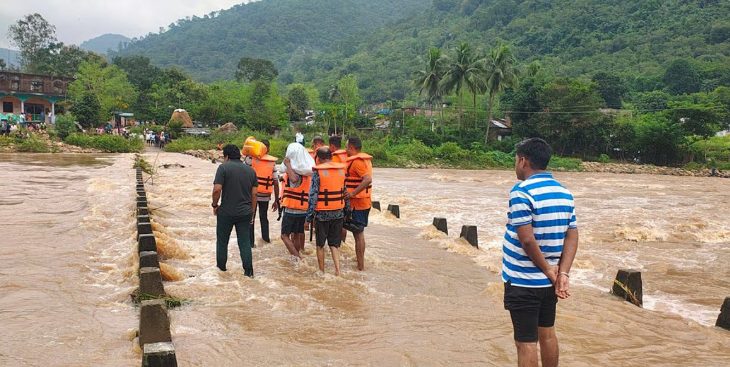
Ganjam district has suffered the maximum damage due to the impact of Cyclone Akvan, with hundreds of acres of agricultural land submerged in floodwater. Crops have been damaged as rainwater inundated farmlands across several blocks, raising concerns among farmers during the crucial harvesting season.
Special Relief Commissioner (SRC) Rajesh Prabhakar Patil, while addressing a press conference, said that the overall impact of the cyclone was lower than initially anticipated. However, Ganjam district has reported significant rainfall and localised flooding. A detailed assessment of the damage is underway, and a clearer report is expected by this evening.
The SRC assured that the government would take all necessary steps to provide compensation to affected farmers without delay.
Heavy Rainfall in Several Blocks
According to the SRC, four blocks in Ganjam district received more than 200 mm of rainfall, while seven other blocks recorded rainfall ranging between 100 mm and 200 mm. Waterlogging has been reported in several areas, with breaches also developing at certain locations.
The administration has initiated the assessment of agricultural losses. Farmers whose crops have been damaged will receive input subsidies as per government norms. Those whose harvested paddy has been soaked in rainwater will also be provided compensation according to the applicable guidelines.
Hundreds of Acres of Farmland Under Water
Several villages across Ganjam district have reported extensive waterlogging in agricultural fields.
In Chirikipada Sasan, Mala Tentulia, Khairachata, Manashila and Balighai, large stretches of farmland remain submerged. Similar situations have been reported in different villages of Buguda block.
In Kabisuryanagar block, agricultural land in villages such as Bhetsingh, Tankachhai, Ambilapalli, Gunduribai, Polasara, Nuagaon, Baliasara and Sunajhola has been inundated.
Likewise, several villages in Purushottampur block, including Bhimpur, Antirigaon, Pandarkholi, Pandia and CH Nuagaon, have witnessed water entering agricultural fields.
In the Kodala area, farmlands in Gudiali, Mardhamekh, Chandanpur, Angargaon and Chingudikhola have also been affected.
The sudden inundation has dealt a major blow to farmers, particularly as the crops were nearing harvest. Many farmers who had borrowed money to cultivate their fields are now worried about their financial losses.
They have demanded the immediate drainage of floodwater, a speedy assessment of crop damage and timely compensation.
Government Preparedness Helped Reduce Impact
The SRC said advance preparations and coordinated efforts by different government departments helped minimise the overall impact of the cyclone.
People from Ganjam, Gajapati, Puri, Jagatsinghpur and Kendrapara districts were evacuated to safer locations ahead of the cyclone. He appreciated the public for following government advisories and cooperating with the administration.
“All the credit goes to the people. They followed the government’s instructions, while teams from different departments worked together in a coordinated manner,” Patil said.
He added that there was no alarming situation anywhere in the state at present.
Focus on Landslide Prevention and Long-Term Measures
The SRC also highlighted the government’s efforts to strengthen disaster preparedness, particularly in landslide-prone areas.
Following the landslide incidents after Cyclone Arnab, special arrangements were made to evacuate people from vulnerable locations.
An Odisha team had earlier visited Uttarakhand to study landslide management strategies and interact with disaster management teams. Another team is scheduled to visit Himachal Pradesh to examine the measures adopted there.
Based on these assessments, the state government will take appropriate steps to strengthen its disaster management infrastructure.
The government is also focusing on strengthening roads, irrigation facilities and other critical infrastructure through long-term planning.
Meanwhile, farmers in Ganjam are awaiting the damage assessment report and early financial assistance as they struggle to recover from the losses caused by the cyclone.
Comments are closed.