

Nearly 500 Bodies Found After Nepal Flood, Morgue Space Runs Short
Temporary morgues set up as authorities struggle to preserve and identify victims of the devastating Nepal flood

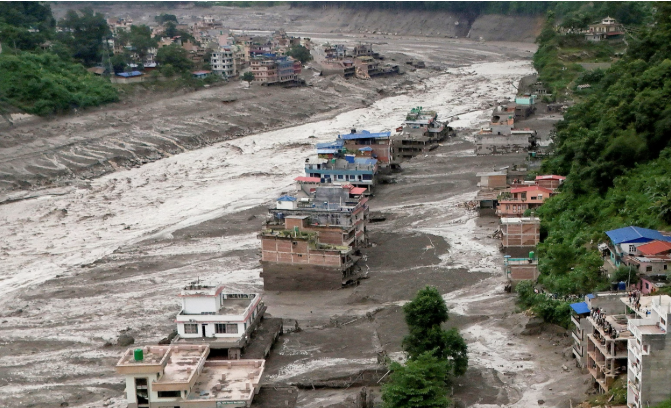
It is not one or two bodies, but nearly 500. Nepal is now facing a major humanitarian and logistical crisis over where to store such a large number of bodies recovered following a devastating flood near the Nepal-Tibet border.
While some of the bodies are yet to be identified, post-mortem examinations of others have also not been completed. Under normal circumstances, the bodies would be kept in morgues or cold storage facilities. However, authorities are now struggling with an acute shortage of body storage space in the affected areas.
The devastating flash flood struck the Nepal-Tibet border region last Wednesday, leaving thousands of people missing. According to official figures cited in the report, at least 475 people have died so far, with their bodies recovered from different locations.
A significant number of the deceased are believed to be foreign nationals. Their bodies must be properly identified and preserved before being handed over to their respective countries. Authorities fear that without adequate cold storage facilities, the bodies may begin to deteriorate before identification procedures are completed.
The crisis is particularly severe in the affected areas of Nuwakot, Dhading and Nawalparasi, where sufficient morgue facilities are not available to accommodate such a large number of bodies. Morgues in neighbouring Pokhara have also reportedly reached their capacity.
To deal with the emergency, the Nepal government is setting up a temporary morgue in Chitwan, where arrangements are being made to store the recovered bodies. The temporary facility has the capacity to accommodate a maximum of around 250 bodies.
However, authorities are concerned that the number of recovered bodies could rise further as search and rescue operations continue. If the death toll increases beyond the available storage capacity, the government may be forced to carry out the last rites of some bodies at the Devghat electric crematorium.
According to Sushil Aryal, an Information Officer associated with the Pokhara Academy of Health Sciences, the bodies are currently being preserved at temperatures between 2 and 6 degrees Celsius.
“Under these conditions, the bodies can be properly preserved for a maximum of around two weeks. Keeping them for a longer period would require specialised storage facilities, which are not currently available,” he said.
This means that bodies which remain unidentified beyond the preservation period may eventually have to be cremated locally.
Tag Numbers for Unidentified Bodies
For bodies that cannot be identified, authorities are planning to maintain detailed records before carrying out the final rites.
Photographs of every deceased person will be taken, while fingerprints and other identifying information will also be collected. DNA samples will be preserved and sent to laboratories for testing.
All available details will be compiled and stored in a central database. Each unidentified body will be assigned a unique tag number.
The records and tag numbers can later help relatives identify their missing family members, even after the final rites have been performed. The system is expected to provide an important link between the victims and their families as Nepal continues to deal with the aftermath of one of the region’s most devastating flood disasters.
Comments are closed.