

Supreme Court Directs States to Provide Separate Bar Rooms and Toilets for Women Lawyers
Supreme Court Makes Separate Bar Rooms and Toilets Mandatory for Women Lawyers in All Courts; Directs States to Release Funds Immediately and Ensure Uniform Facilities Nationwide.

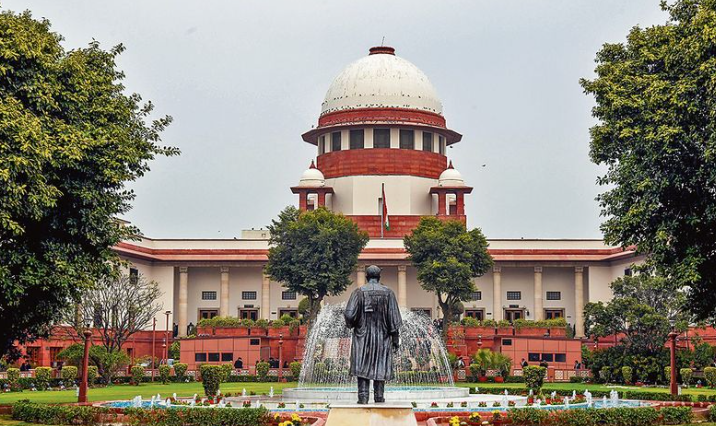
The Supreme Court has issued significant directions to address the lack of basic infrastructure and facilities for women lawyers in court complexes across India. A bench comprising Chief Justice of India (CJI) Surya Kant, Justice Jaymalya Bagchi and Justice V. Mohana directed that separate bar rooms, toilets and other essential facilities must be provided for women advocates, regardless of their numbers.
The court emphasised that state governments and high courts must ensure these facilities are established even if additional funds or land are required.
Separate Facilities Mandatory in All Courts
During the hearing, CJI Surya Kant strongly objected to the absence of dedicated bar rooms for women lawyers. He stressed that high courts and state governments have a responsibility to provide proper facilities for women advocates, including young lawyers beginning their professional careers.
The directions apply to district, sub-divisional and taluka courts. The court also instructed state governments to release the necessary funds without delay and asked high court infrastructure committees to prioritise the work at district and taluka levels.
The bench further stressed that facilities should follow a uniform framework across all states.
Punjab and Kolkata Infrastructure Gaps Highlighted
During the proceedings, amicus curiae informed the court that only 21 of the 69 respondents had submitted status reports.
Senior advocate Monica Gussen, appearing for the petitioners, highlighted the infrastructure shortage in Punjab, stating that only nine of the state’s 67 court complexes had toilets for women lawyers.
The absence of a dedicated women’s bar room at the Kolkata City Court was also acknowledged during the hearing.
Reacting to the situation, the CJI said the case had reached the implementation stage and that the required bar room in Kolkata must be constructed immediately.
Attorney General Appointed Nodal Authority
The Supreme Court appointed Attorney General R. Venkataramani as the nodal authority to coordinate with states and Union Territories and compile progress reports.
The Attorney General informed the court that consultations with state Advocates General were underway. Another meeting is expected by the end of October to consolidate the reports.
The matter will be heard next on December 2, when the court is expected to review progress in implementing its directions.
Comments are closed.